The viral ‘closing shift’ concept transforms an ordinary night into a mini home reset, applying the same logic restaurants use when they shut down for the night. For many Americans, the chaos that makes mornings stressful isn’t one big disaster. It’s the sink of cups and the sticky counter and the shoes at the door and the pile of laundry and the trash smell that’s been forgotten in the kitchen. This technique is broken up into small, visual, doable steps that homeowners, renters, parents and busy grocery shoppers can wake up to a calmer space without having to deep-clean the whole house.
Clear the Sink So Morning Doesn’t Start With Yesterday.
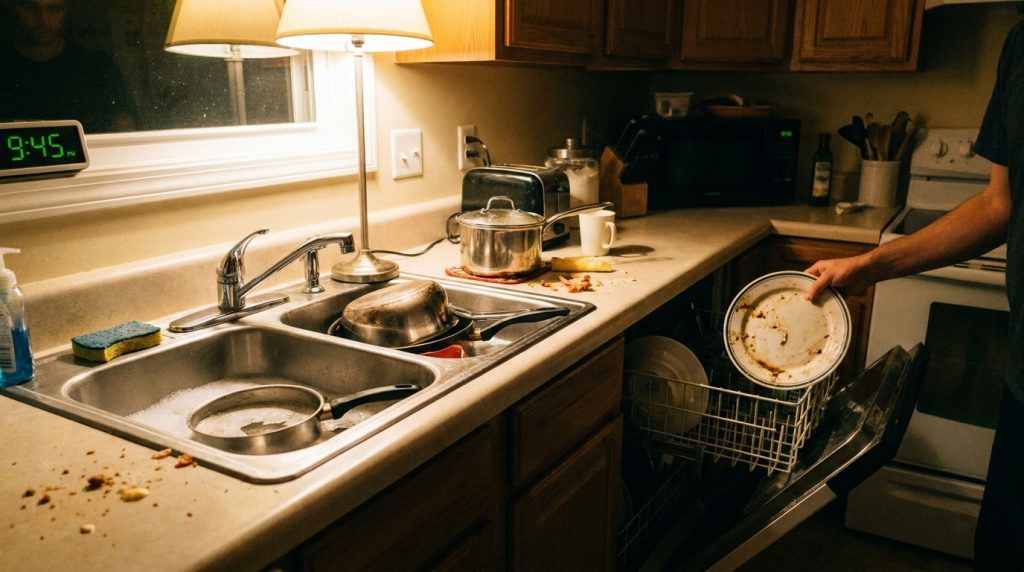
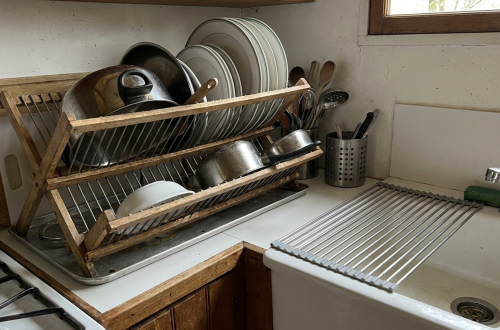
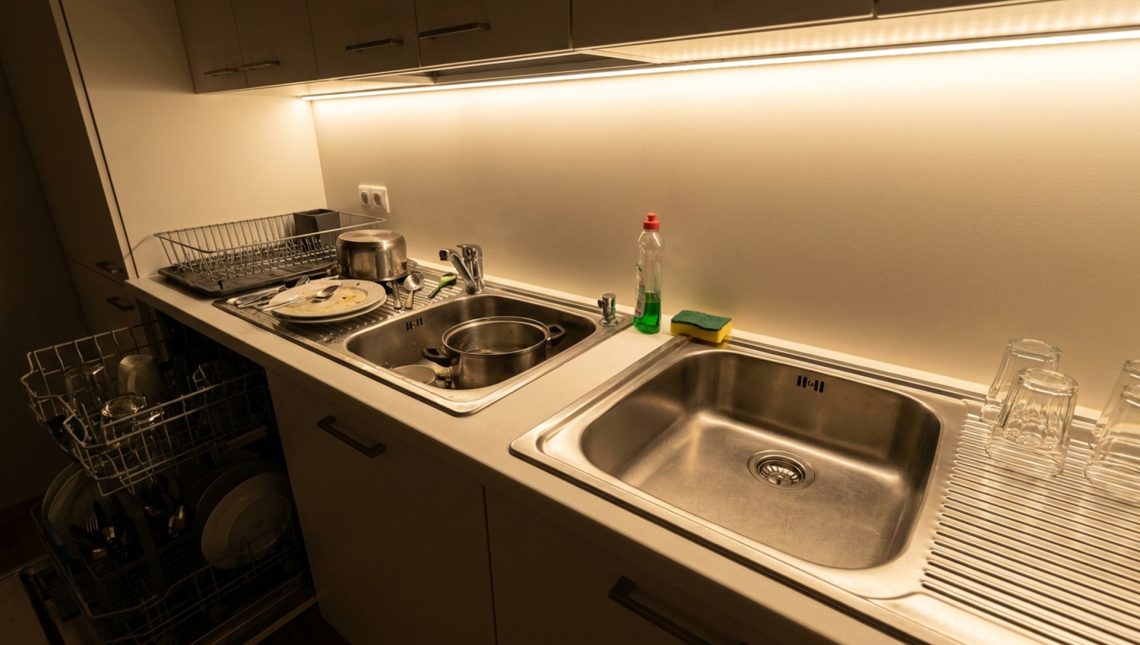
Maybe it’s the washbasin that’s really making your kitchen look messy at 7 a.m. Leaving Dishes in the sink look bad, but they also make the next morning feel like it already has a chore on the docket. Many U.S. kitchens quickly fill up with dishes, cereal bowls, lunch boxes and pans after dinner. This isn’t a full kitchen deep clean, it’s the closing shift version. It’s just about getting what can go in the dishwasher, hand-washing that one awkward pan and creating a clear stopping point for the sink. That visual empty space is important because it tells your brain that the kitchen is “closed,” not still open for cleanup. This one step can help make breakfast, coffee, and packing lunches less chaotic, especially for parents and renters.
Wipe One Main Counter, Not the Whole Kitchen.
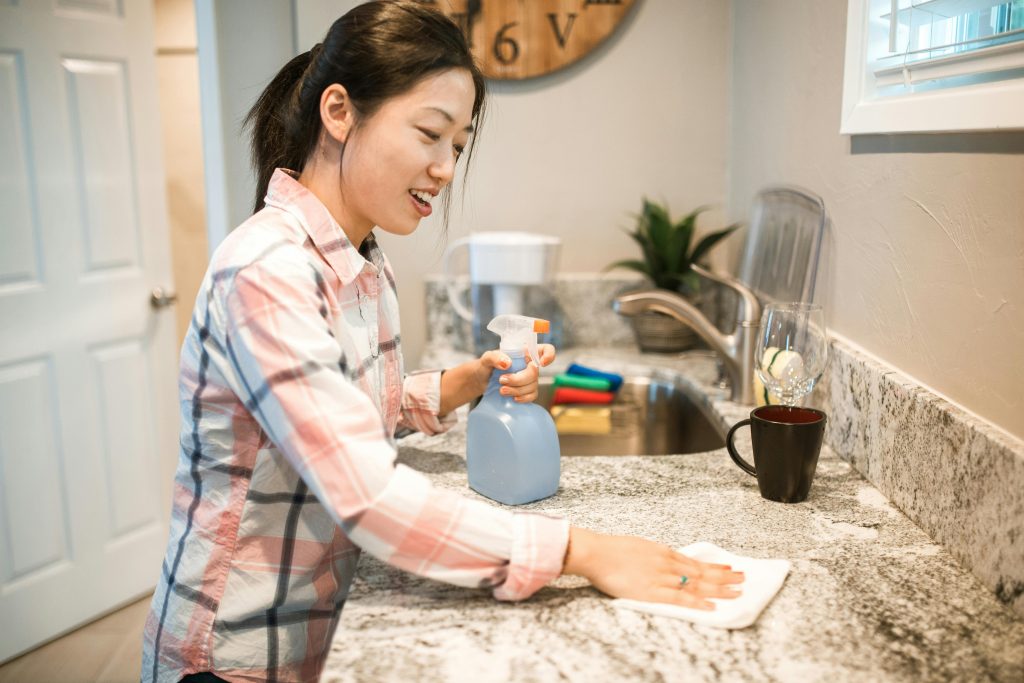
You don’t have to clean every surface tonight.
Many people have the misconception that an evening reset is an all-or-nothing cleaning session. That makes it easy to let the routine slide. A better move for closing shifts is to wipe down the main landing zone. The counter where coffee gets made, backpacks land, groceries get unpacked, or lunch boxes are filled. That one surface often sets the morning rhythm of the average American kitchen. A clean workspace without a mop-and-scrub night. Just wiping off the crumbs and sticky rings and mail from that one counter is enough. It also makes the washbasin reset feel intentional, as the two most visible kitchen zones now match.
Reset the Coffee Area Before Sleepy Hands Find It.
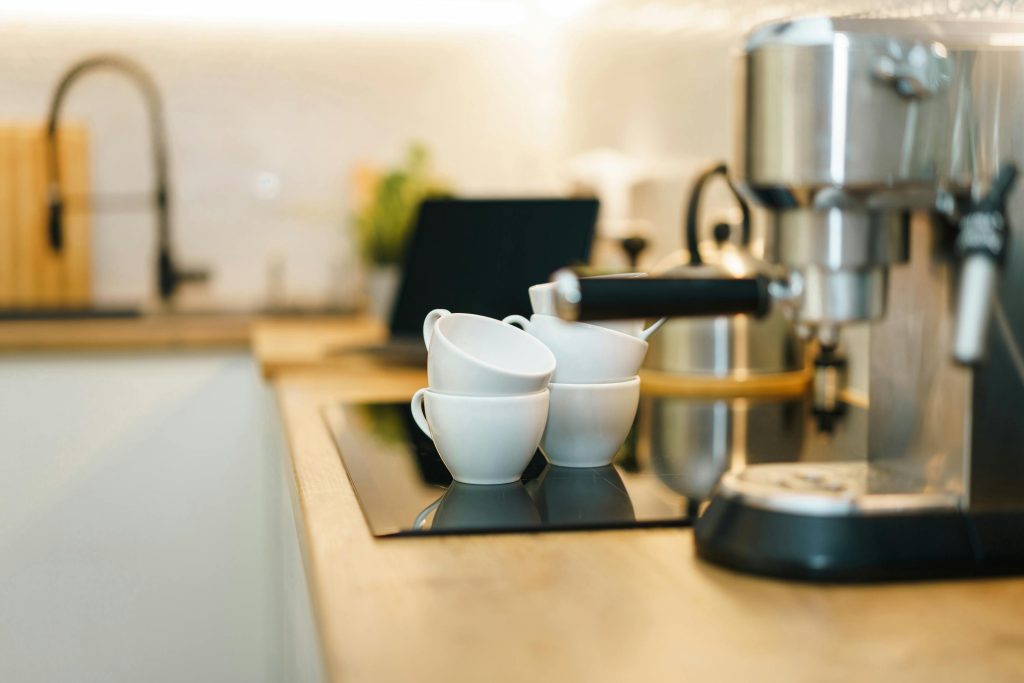
Your coffee corner might be stealing time before you’re fully awake.
The coffee area is a small zone, but for many Americans it’s the first hurdle of the day. An ordinary morning may be rushed with empty filters, scattered pods, sticky spoons, yesterday’s mug or a missing travel cup. The closing-shift method treats the coffee corner like a mini workstation: toss out used grounds, set out a clean mug, refill water if needed, and place the spoon or pod where sleepy hands expect it. This isn’t about making the counter look magazine-perfect. It’s about eliminating one decision before school drop-off, the commute or remote-work login starts competing with five other directions.
Move Cups and Plates Before They Become a Second Mess.
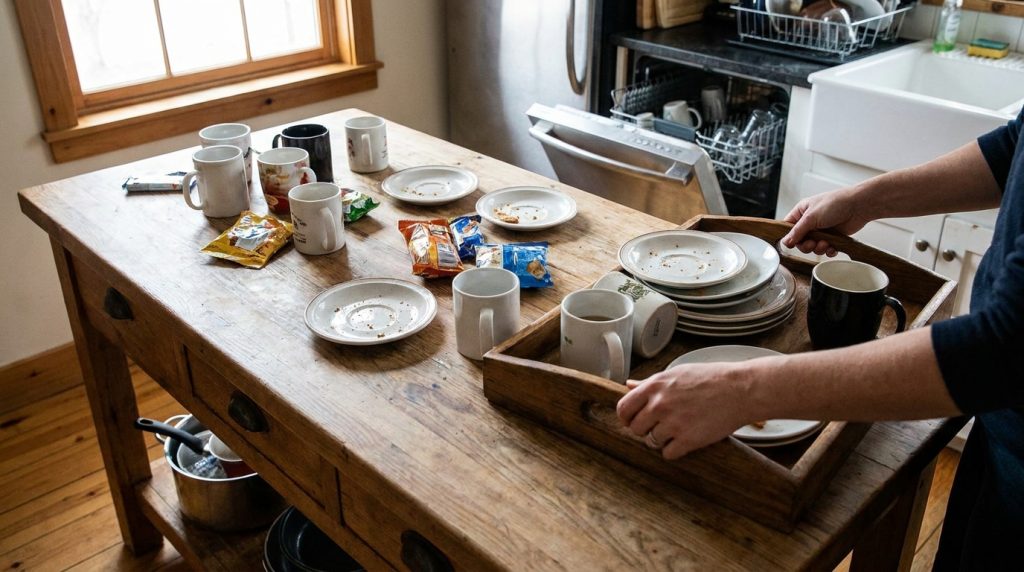
Maybe the mess isn’t in the washbasin yet.
Most homes don’t have one big pile that looks cluttered. They look messy because cups and plates are left in small places. The coffee table, bedroom nightstand, desk, kitchen island or kids’ play area. The closing-shift version is a quick sweep of the dishes before bed. Use one hand or a tray or a small tub. Collect only food Items. This step can help prevent sticky rings, mystery smells and the annoying morning hunt for clean cups in American homes with kids or roommates or open-plan living rooms. And it also makes the dishwasher run feel more complete because the hidden dishes aren’t holding up the restart of the mess.
Put Entry Shoes Where Tomorrow Won’t Trip Over Them.
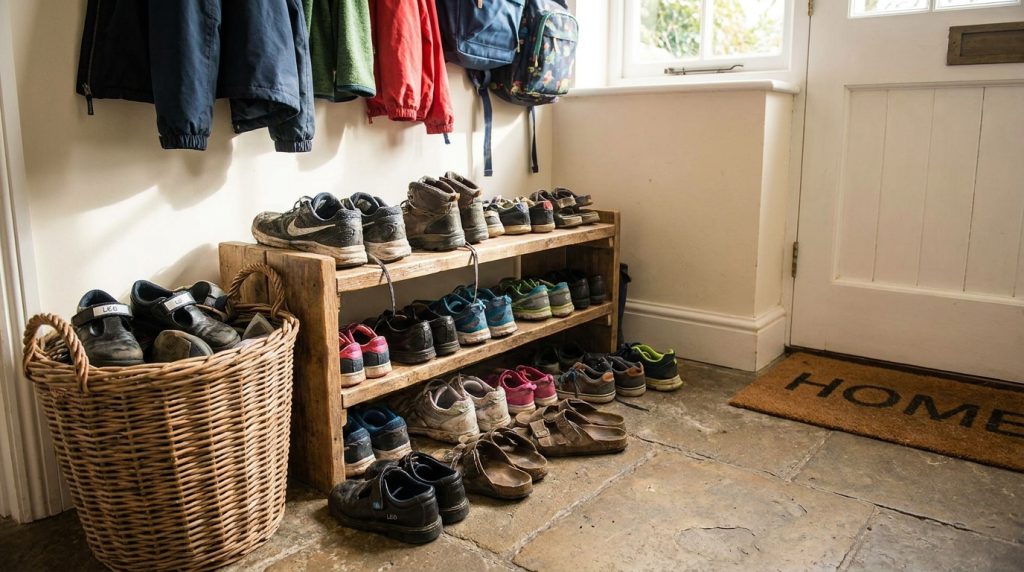
The front door can make the house look more cluttered.
Shoe storage by the entryway is often forgotten about at night when everyone is home. Same pile in the morning, and it’s a bottleneck: missing trainers, tripping hazards, wet soles, kids fighting over which pair is theirs. You don’t need a custom mudroom to refresh for a closing shift. A basket, two-tier rack or “daily shoes only” rule can be enough for rentals, apartments and older U.S. homes. The trick is to get the shoes out of the way, and only store the likely pairs for tomorrow by the door. That little boundary gives the house a more together feeling before you even get to the kitchen.
Fold the Throw Blanket So the Living Room Looks “Closed
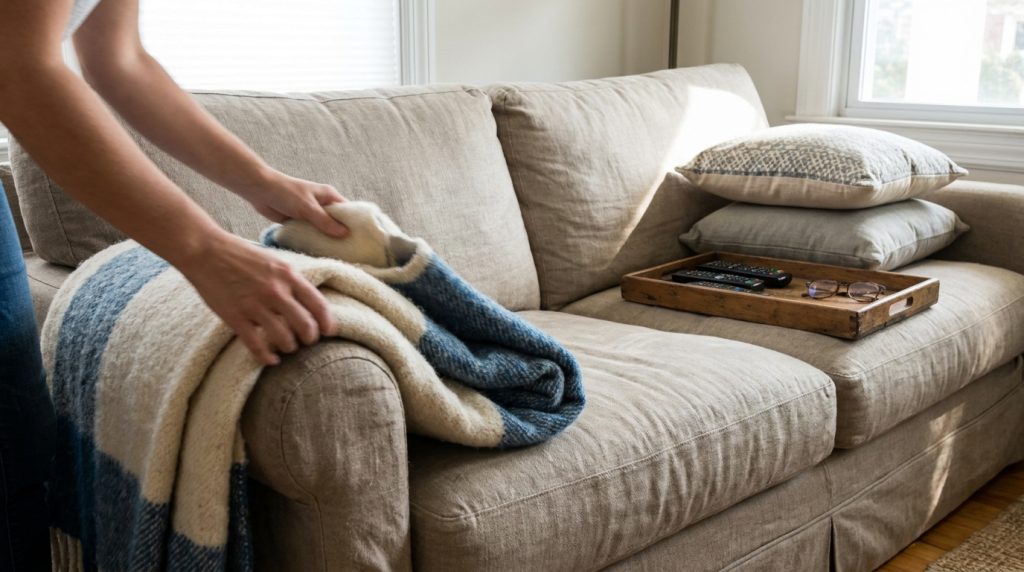
The couch might be the reason the whole room looks unfinished.
The living room reset works because it’s so visible. A rumpled blanket, a sagging pillow and a wayward remote can communicate even the appearance of being used up. It takes less than a minute to make it look “closed” by folding the throw blanket over the sofa arm, stacking remotes and straightening one pillow. This is especially handy in apartments, open plan homes and houses where the living room is visible from the front door. It is not about pretending nobody lives there. It’s about giving the room a clear end-of-day signal so tomorrow starts in calm instead of visual noise.
Gather Laundry Into One Basket Before It Spreads.
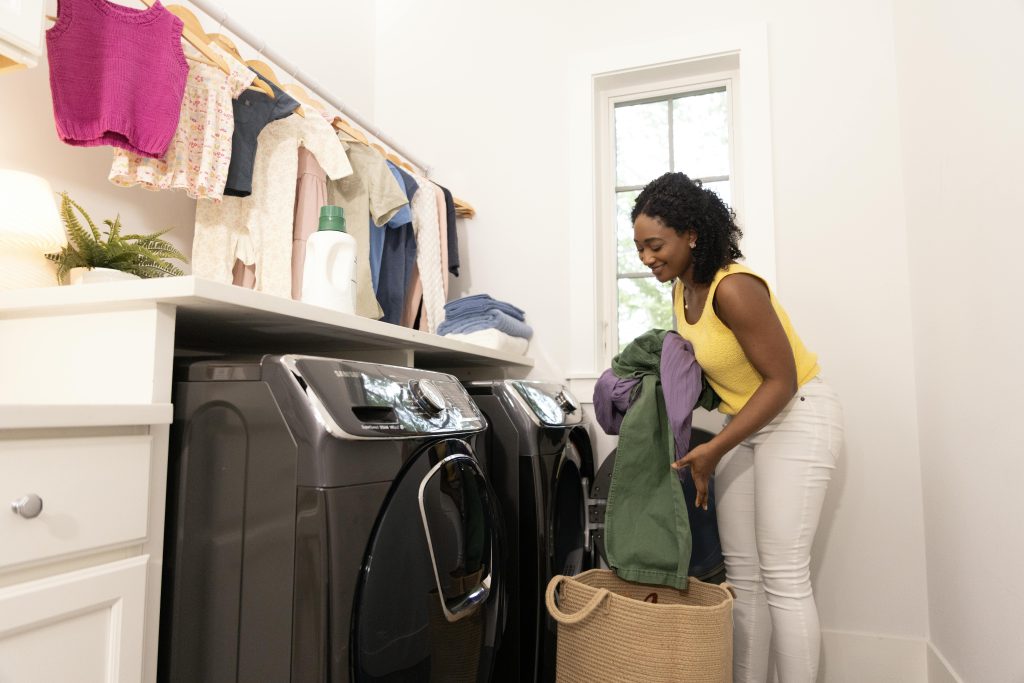
When laundry is in every room, it looks worse.
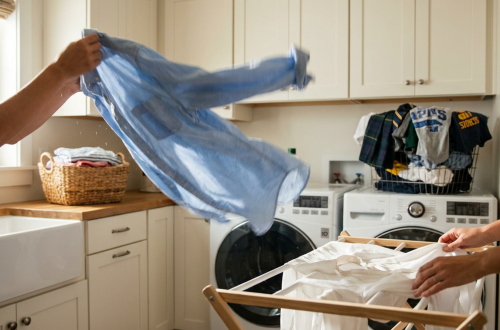
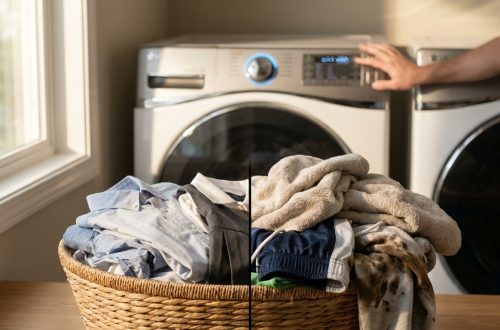
Laundry can make a home feel messy, even when the counters are clean. Socks everywhere by the couch, towels on bathroom floors, kids’ clothes in hallways, half-worn sweatshirts on chairs all contribute to a sense of the house being behind. With the closing-shift method you don’t have to do a load of laundry at night. All it asks is for you to gather stray laundry in one basket or hamper area. That one container brings the visual story from “laundry everywhere” to “laundry waiting.” This also solves the classic scramble for missing socks, school shirts, gym clothes or towels in U.S. homes with busy mornings.
Take Out Food Scraps Before the Kitchen Smells Off
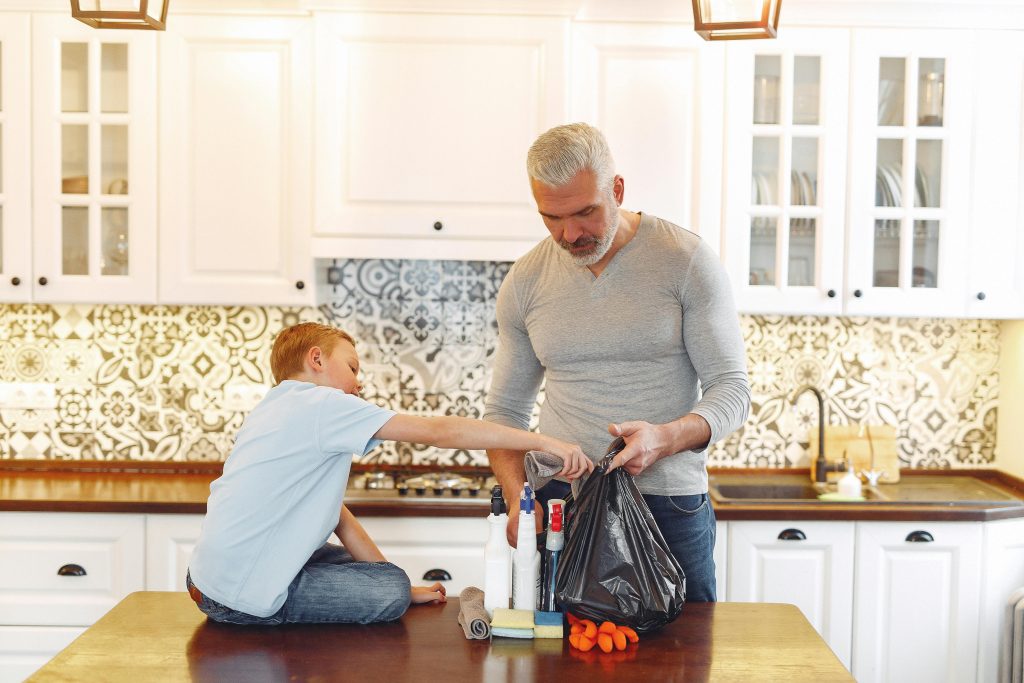
A kitchen may look clean but still smell like last night.
The trash in many a kitchen does not have to be overflowing to create a stale morning smell. The onion skins, meat wrappings, fruit peels, takeaway containers, coffee grounds can rest peacefully under the sink or by the island until the kitchen feels ‘off’. The closing-shift move is simple: Remove the worst-smelling scraps before you go to bed, particularly after dinner. Apartment renters may only need a small tied bag; homeowners can use an outdoor bin or sealed compost pail. This step is less about perfection, and more about avoiding yesterday’s food being tomorrow’s first impression of the kitchen.
Prep One Morning Thing, Not the Entire Day.
Trying to get everything ready can make you quit the routine.
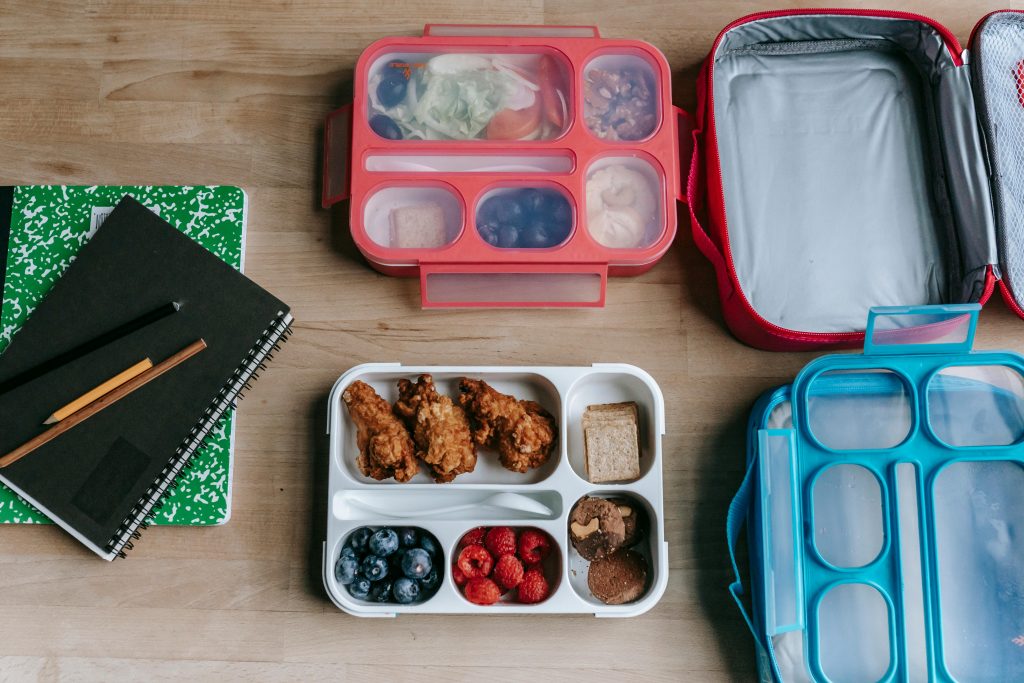
The closing shift is most effective when it is small enough to be repeated. Instead of planning the whole next day, prep one thing that usually slows you down. That could be a travel mug beside the coffee maker, a lunchbox in the fridge, a backpack near the door, a work badge on the counter or oats set out for breakfast. Many mornings in U.S. households don’t run on the same predictable schedule every day. Sometimes fixing one bottleneck is more empowering than a long checklist. The aim isn’t to have a perfect routine; it’s to wake up with one fewer “Where is it?” moment.
Do a Two-Minute Room Scan Before the House “Closes”.

The last two minutes may be what sticks with the rest of the routine.
The final scan is the closing-shift moment that ties it all together. Scan the main living areas for only the most obvious out-of-place items — a cup, a sock, a toy, a bill, a snack wrapper, or a blanket on the floor. If items are in different rooms, use a small basket and don’t turn it into a full organising session. In American homes with kids, pets, roommates or small apartments, this two-minute scan catches the little visual irritants that can make a space feel messy by morning. It gives the house an end line, which is why the method feels different from endless cleaning.