In many U.S. homes, the under-sink cabinet quietly turns into a lineup of half-used bottles, extra wipes, refill jugs, and mystery sprays. That clutter can make a simple kitchen reset feel harder than it needs to be. A one-spray setup does not mean using one product on every surface. It means keeping one everyday spray, the right cloths, and a small tray where quick wipes actually happen. These small storage and cleaning habits can help counters, fridge handles, cabinet pulls, and bathroom sinks feel easier to maintain without turning every wipe into a full cleaning project.
Put One Everyday Spray in the Front Row.
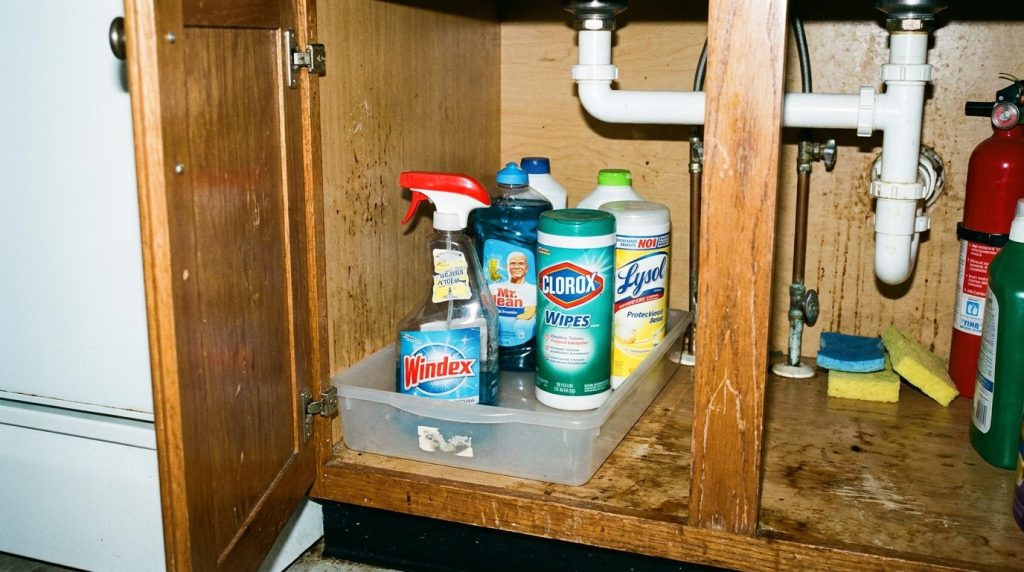
One spray up front can change the whole cabinet. In many U.S. kitchens, the under-sink cabinet becomes a parking lot for sprays that all seem useful until a spill happens and the right bottle is buried. A simpler setup keeps one everyday surface spray in the front row for basic resets: crumbs near the toaster, light fingerprints on cabinet pulls, or a quick wipe around the sink edge. Specialty cleaners can still stay in the house, but they do not need to compete for the first grab. This small change can make cleaning feel less like a search mission and more like a 30-second habit, especially after dinner, school lunches, or a grocery unpacking mess.
Keep Specialty Cleaners Out of the Daily-Wipe Zone.
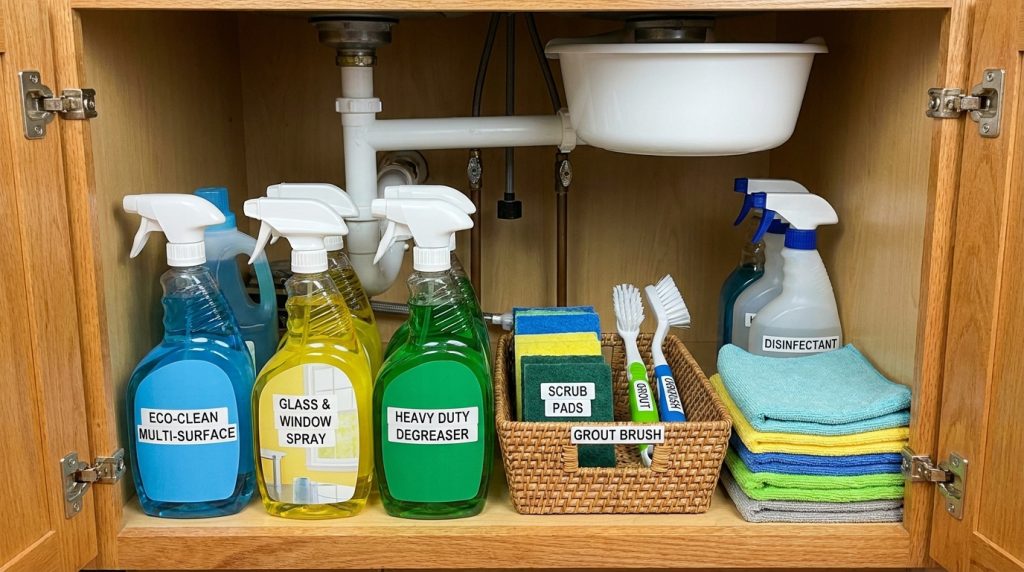
One-spray setup does not mean one spray for everything. The cleanest under-sink setup often starts with a simple boundary: daily wipes in front, specialty jobs behind. In a typical American kitchen, glass cleaner, stainless polish, floor cleaner, and bathroom products may all live near the sink, but that does not mean they should be grabbed for every crumb or fingerprint. Keeping specialty bottles separate can lower decision fatigue and reduce the chance of using a product too heavily or on the wrong kind of surface. The everyday spray becomes the reset tool, while the other bottles stay available for their real jobs. It is less about minimalism and more about making the common task obvious
Store Cloths Beside the Spray.
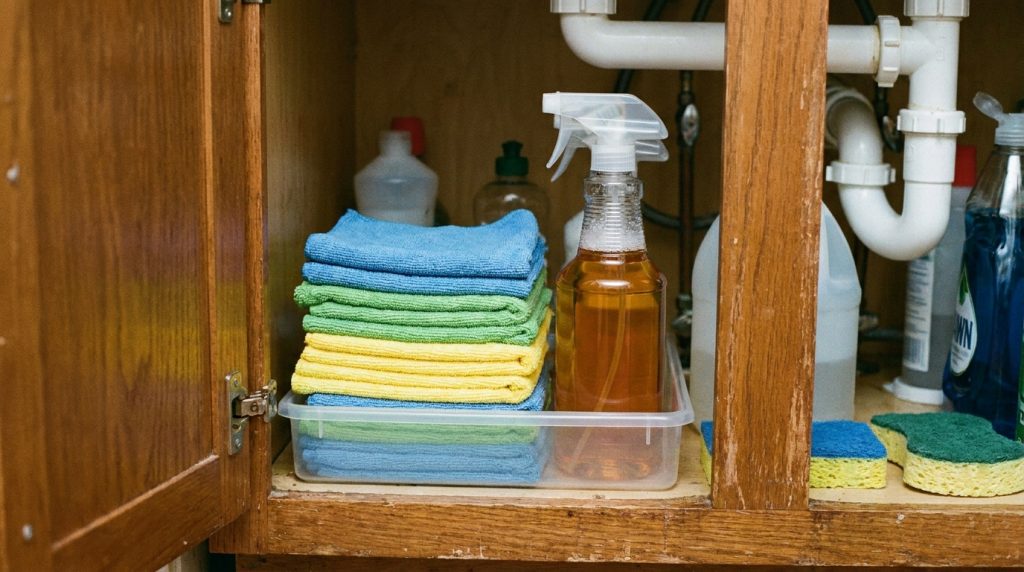
A spray without a cloth is only half a reset station. A one-spray setup works best when the cloth is not across the house, in the laundry room, or mixed into a drawer full of old towels. In many U.S. homes, the spray bottle is easy to find but the wiping cloth is the part that slows everything down. Keeping two or three clean cloths beside the spray makes the reset more automatic after cooking, coffee drips, sticky cabinet pulls, or a dusty bathroom counter. Color-coded cloths can also help families keep kitchen, bathroom, and greasy-zone wipes separate. The payoff is not a perfect home; it is fewer small messes that sit around because the tool was not ready.
Give Greasy Areas Their Own Cloth
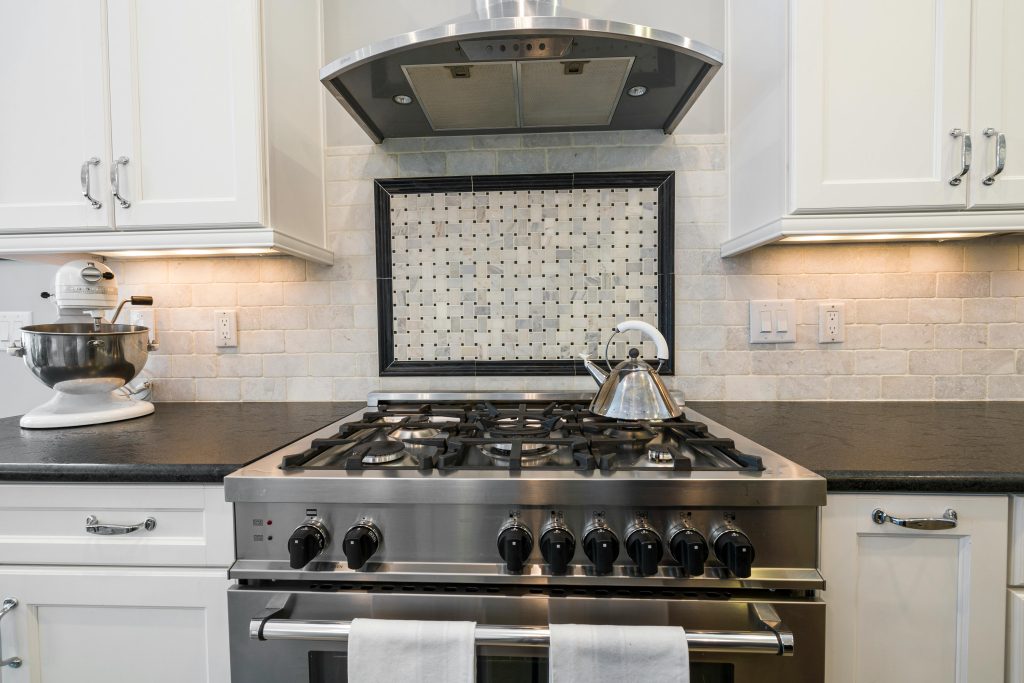
The greasy wipe may not belong with the clean-counter cloth. Greasy areas deserve their own small rule. Around the stove, microwave, air fryer, or toaster oven, a quick wipe may pick up oil that does not belong on cabinet pulls, fridge handles, or the kitchen table. That does not mean every light smudge needs a deep clean. It simply means one cloth can be reserved for greasy zones and washed more often. In a busy American kitchen, this can help surfaces feel less streaky after dinner and keep the daily spray routine from spreading the very film it was meant to remove. The setup stays simple: one everyday spray, but not one cloth for every kind of mess.
Add Fridge Handles and Cabinet Pulls to the Reset.
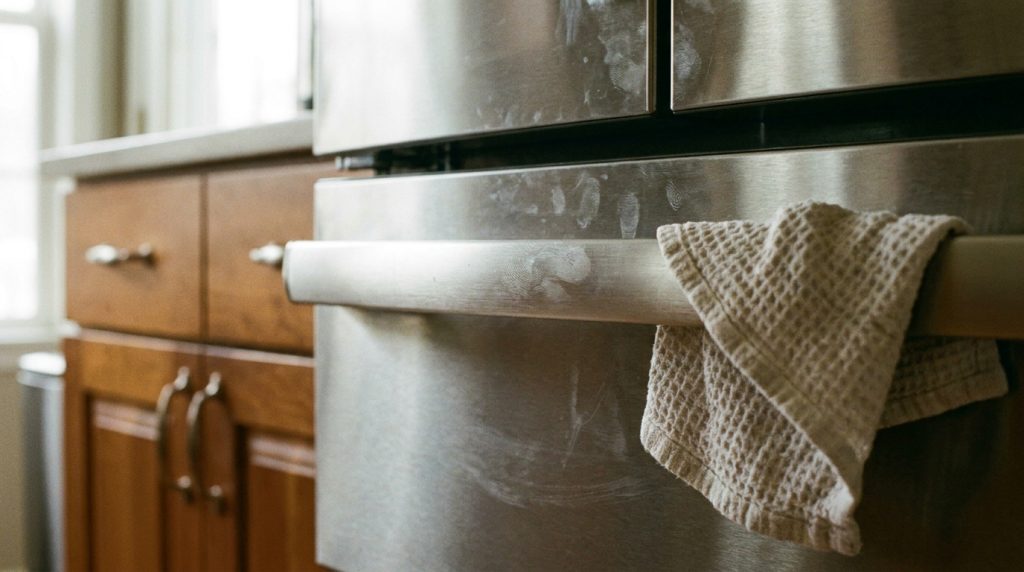
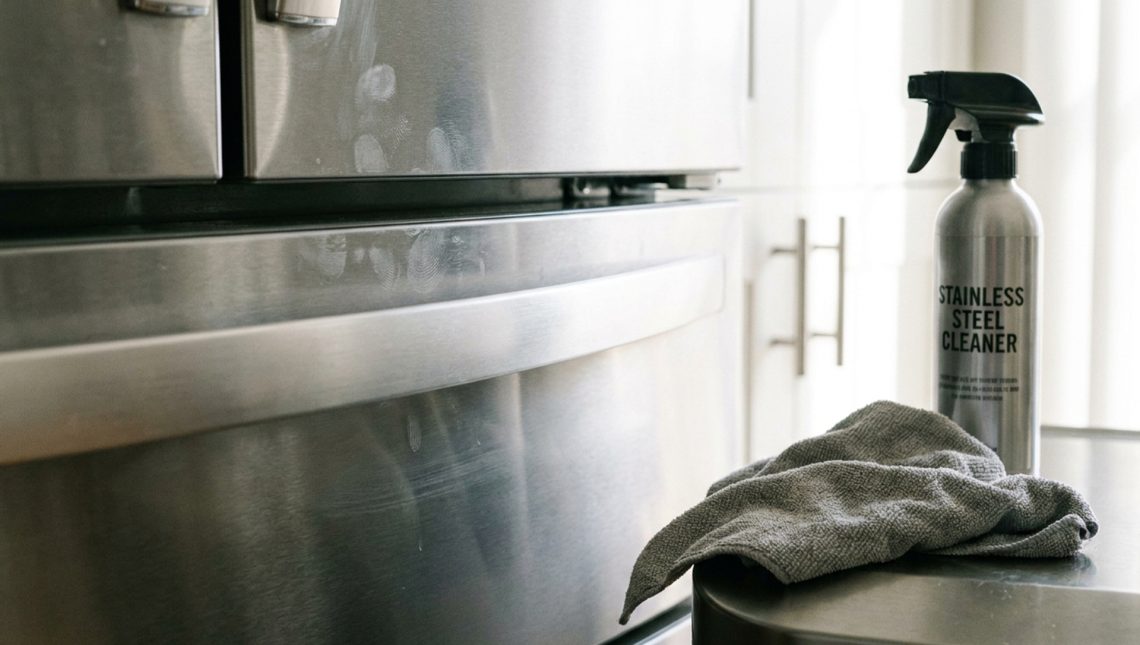
The counter may be clean while the handles still look busy. A one-spray setup becomes more useful when it has a short target list. After a grocery run, school lunch prep, or a weeknight dinner rush, the fridge handle and cabinet pulls often collect the marks people stop seeing. Adding those spots to the quick wipe routine can make the whole kitchen feel fresher without turning it into a top-to-bottom clean. The key is keeping the job small: spray the cloth when the label allows, wipe the handle, check the pulls, and move on. In many U.S. homes, these tiny touch points are more visible than the back corner of the counter, especially in bright morning light.
Use a Small Tray Instead of a Cabinet Full of Bottles.
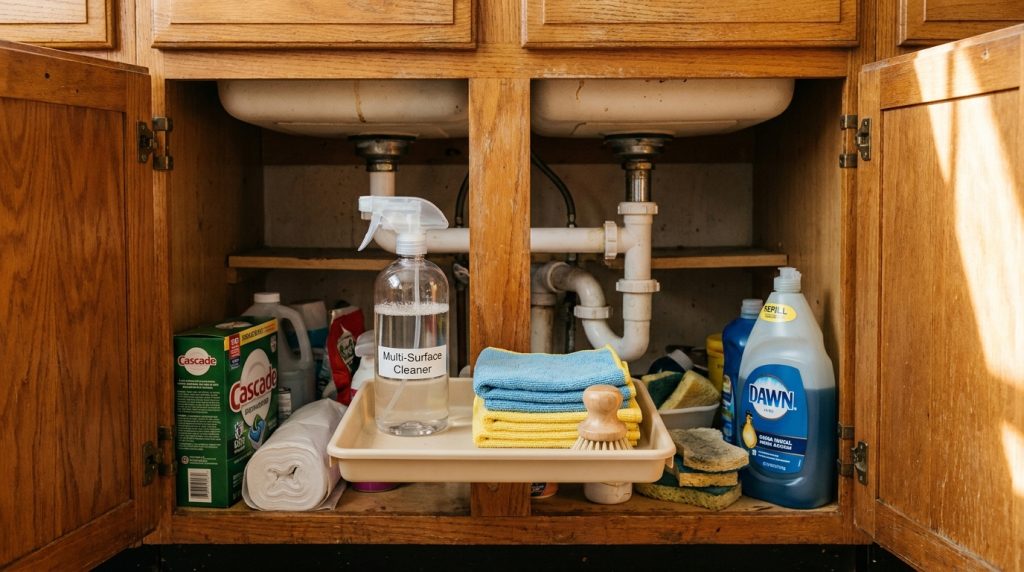
The tray is the shortcut, not another bottle. A small tray gives the one-spray setup a home. Without it, the bottle slides behind refill jugs, loose sponges, trash bags, dishwasher pods, and mystery extras. With it, the everyday reset kit can be pulled forward in one motion. In rental apartments, older kitchens, and busy family homes, this is often easier than installing a full organizer around pipes. The tray also creates a natural limit: if the daily spray, cloths, and small brush fit, they stay; if a bottle is for a rare job, it belongs somewhere else. That small storage cue can make quick wipes feel normal instead of like another cabinet dig.
Move Rarely Used Bottles Out of the Front Row.
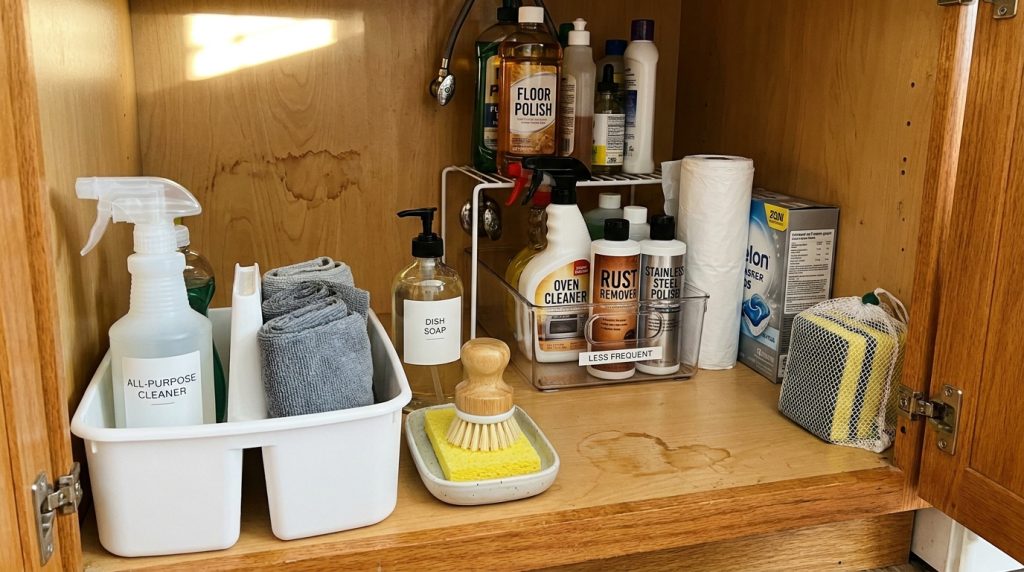
The bottle you use twice a year may be blocking the one you need tonight. Rarely used bottles often creep into the easiest spot because nobody has decided where they truly belong. Rust remover, oven cleaner, floor polish, stainless spray, and seasonal products may all be useful, but they do not need to sit in front of the everyday wipe kit. Moving them to the back row, a labeled bin, or a higher utility shelf can make the daily routine faster and calmer. This is especially helpful in small apartments and suburban kitchens where the cabinet also holds trash bags, dishwasher supplies, and extra sponges. The goal is not to throw everything away; it is to stop rare jobs from crowding the common one.
Check the Label Before Using One Spray Everywhere.
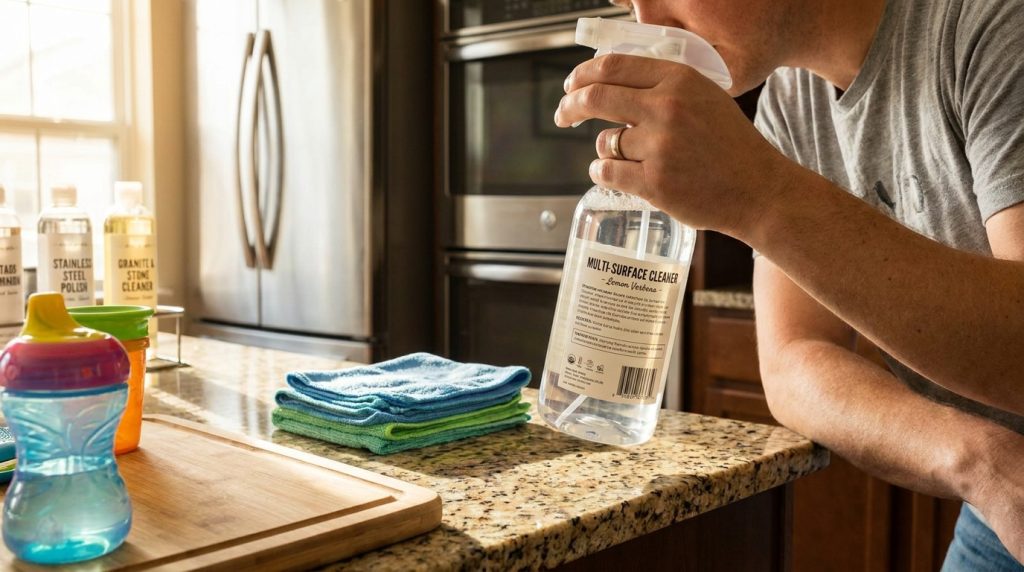
“All-purpose” still has limits. The one-spray setup works best when it stays practical, not careless. Many households want one bottle for everyday surface resets, but counters, stone, stainless, wood, electronics, children’s items, and food-contact areas may have different care directions. A quick label check helps keep the habit useful without overstating what one spray can do. It also helps avoid mixing products or layering sprays when a rinse, damp cloth, or specialty cleaner is the better fit. In a normal U.S. kitchen, the easiest routine is usually the one that is clear: one daily spray in reach, cloths beside it, specialty cleaners separate, and the label checked before new surfaces.