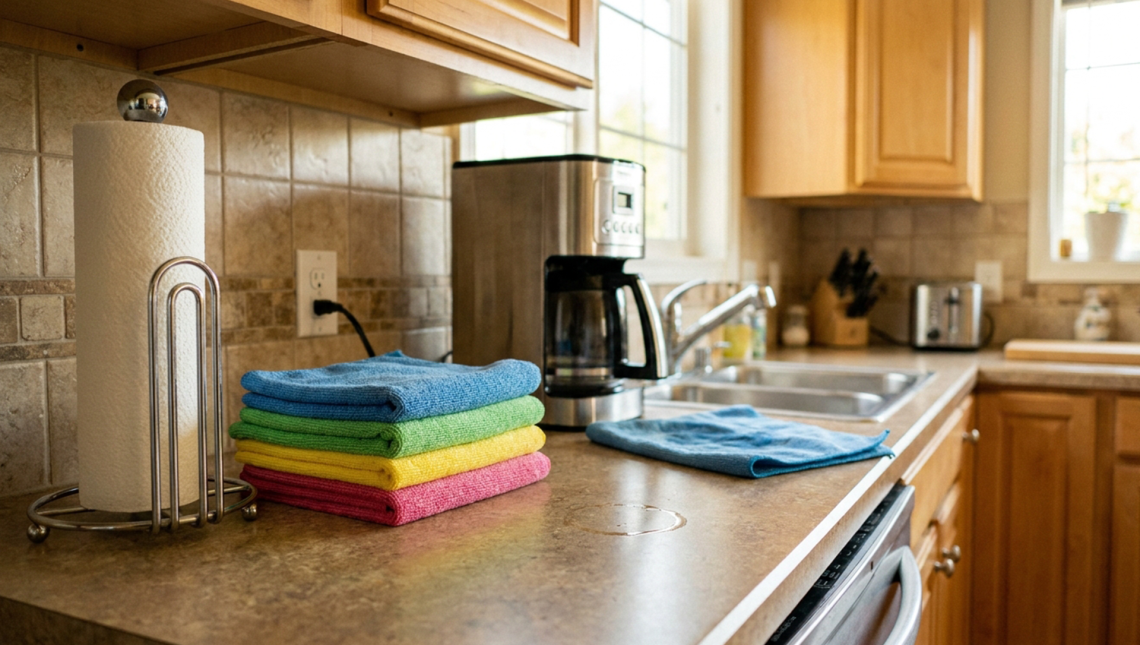
The kitchen roll is typically gone fastest where people wipe daily: kitchen counters, fridge handles, coffee drips, pet bowl splashes, bathroom sinks. For a lot of houses in the U.S., the hard part isn’t the cleanup. The friction often starts with the constant grabbing, tossing and replacing disposable towels for small messes. That’s why more households are opting for a simple microfibre cloth swap that makes quick wipes easier, faster and less wasteful without turning cleaning into a bigger routine. From basket setups by the kitchen sink to colour-coded cloths that make little tasks feel easier, these easy resets can make counters, appliances and busy family spaces feel fresher with less effort throughout the week.The small detail is easy to overlook until you find yourself using the paper towel roll faster than you expected. Quick cleans are done dozens of times a day in many American households — coffee drips by the coffee maker, fingerprints on the fridge, splashes around pet bowls, crumbs around lunch prep or water rings by the sink. The cleanup itself takes just seconds usually. It’s the incessant reaching for disposable towels that get tossed after one little swipe that slows people down.
The useful part of the microfibre cloth swap isn’t turning the house into a perfectly organised system. It’s making quick clean-ups easier before the mess has time to spread across the counter, hob or bathroom sink. A little basket of washable cloths, in the right place, can quietly shift the frequency of wiping things down without making the routine seem larger.
Why the First Cloth Placement Matters More Than the Cleaning Routine
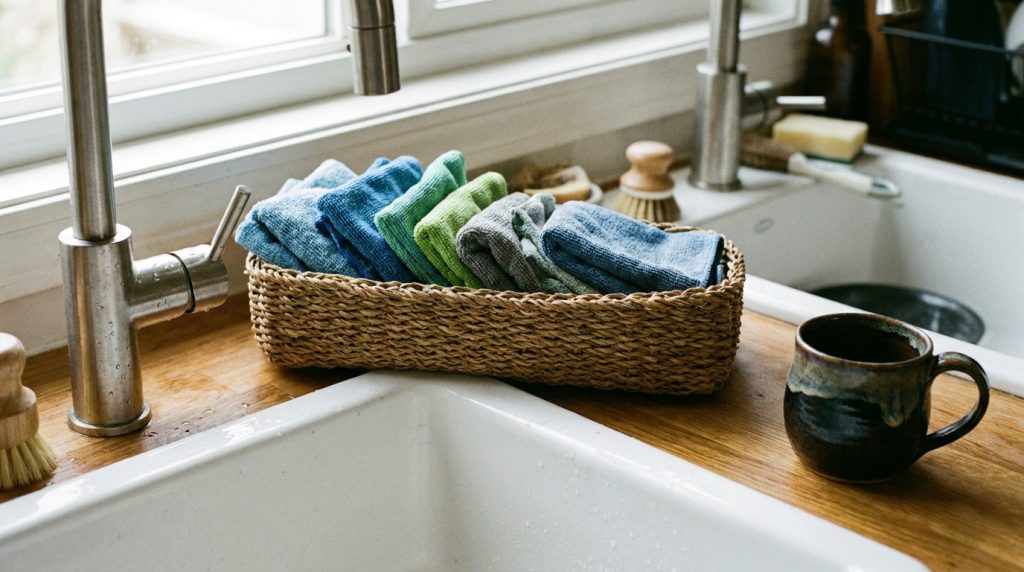
The clue is usually in the place where people clean the most. But when microfibre cloths are hidden away under the sink or rolled into the laundry pile, many reach for paper towels because they’re quicker to grab.Setting up a small system can make the task look easier before it even starts. Some households keep a shallow basket near the sink, coffee station or stove so that cloths are in plain sight in the moments when they’re needed most. This simple placement is often more important than buying additional cleaning supplies or adding complicated storage systems.It may feel like a tiny habit but it can quietly change the whole kitchen rhythm. You can use one microfibre cloth for a few quick wipes throughout the day for drips here and there instead of grabbing several paper towels to be washed later. That can also help make cleanup interruptions shorter and less annoying in busy family kitchens.What’s helpful isn’t perfection. It removes the gap between seeing a mess and deciding if it feels worth cleaning up now.
The Small Color-Coding Trick That Makes Counters Feel Easier to Manage
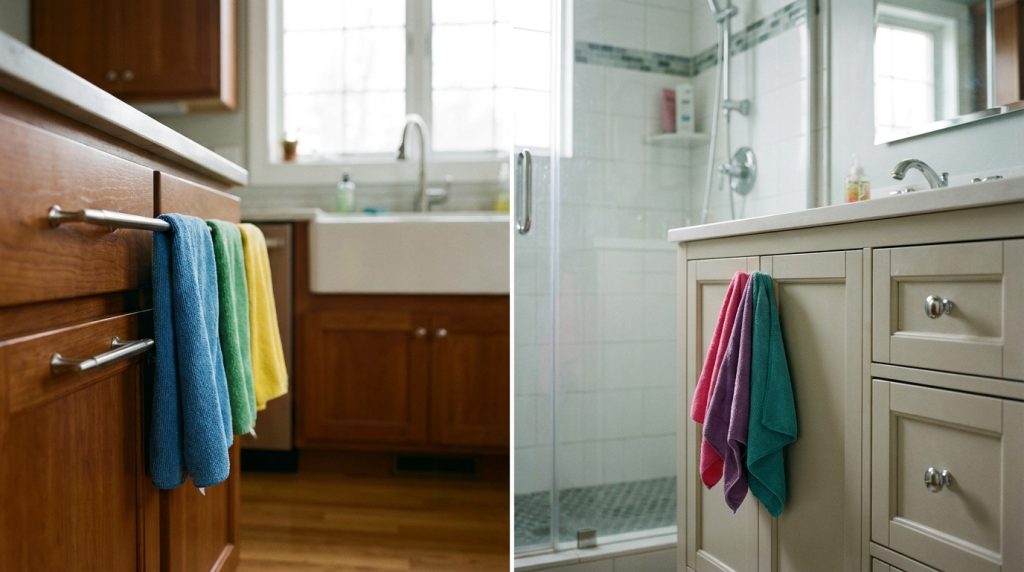
Most people only realise the confusion when the cloths begin to mix together. Microfibre cloths are best for many U.S. homes when they are instantly recognisable.
A simple colour system can help the routine last longer. Some homes have blue cloths for the kitchen counters, grey cloths for bathrooms and green cloths for dining tables or areas for pets. We don’t want to write a strict rule book for cleaning. It’s reducing the hesitation that’s making people reach for disposable towels again.The small visual cue can also help clothes feel cleaner and more organised between washes. The colours quietly segregate tasks without the need for extra labels or storage bins instead of wondering if the same cloth touched bathroom surfaces earlier in the day.The beauty of the trick is that it takes so little effort to keep up with. Once you get to know the colours of the cloths, quick wipe-downs can often feel more automatic in the rushed mornings, dinner cleanup or after school snack prep.
Why Damp Cloth Storage Can Change How Fresh the Kitchen Feels
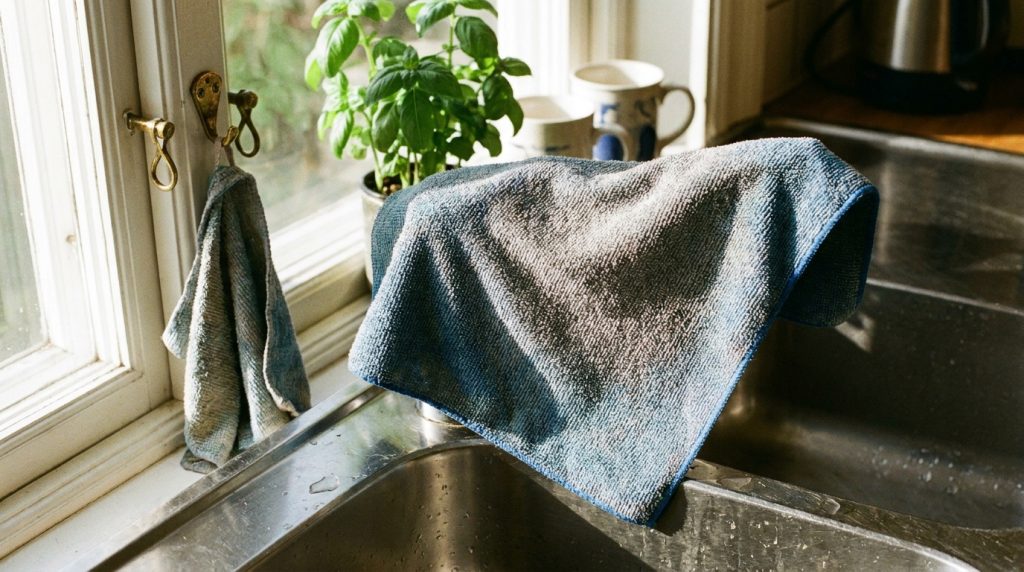
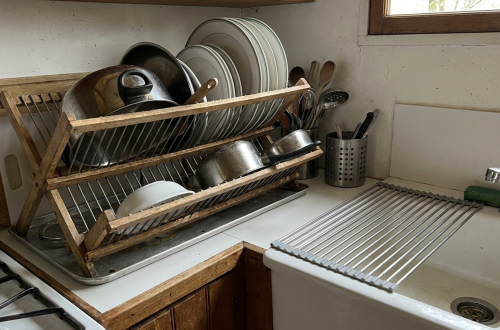
Then often the freshness cue is where the cloth dries after that. If you have a damp microfibre cloth crumpled up by the sink that only wiped up light messes on the counter, it can quickly feel unappealing to use again.A small drying setup can deal with the problem quietly. Some people hang cloths over a sink divider, or use a small adhesive hook on the inside of a cabinet door, or make a slim drying rack by a laundry room sink. The trick is to have the air flow so the cloth dries completely before the next wipe.The goal isn’t to make your kitchen look perfectly organised. This prevents the fabric from becoming heavy or stale from repeated use during the day. That simple act of drying, in the long run, makes reusable cloths seem more practical for many homes.This seemingly minor storage note can also help reduce unnecessary laundry. “Rather than washing cloths after every quick wipe, households often rotate a few cloths throughout the week, whilst still keeping surfaces feeling fresh.”
The One-Basket Reset That Helps Counters Stay Less Crowded
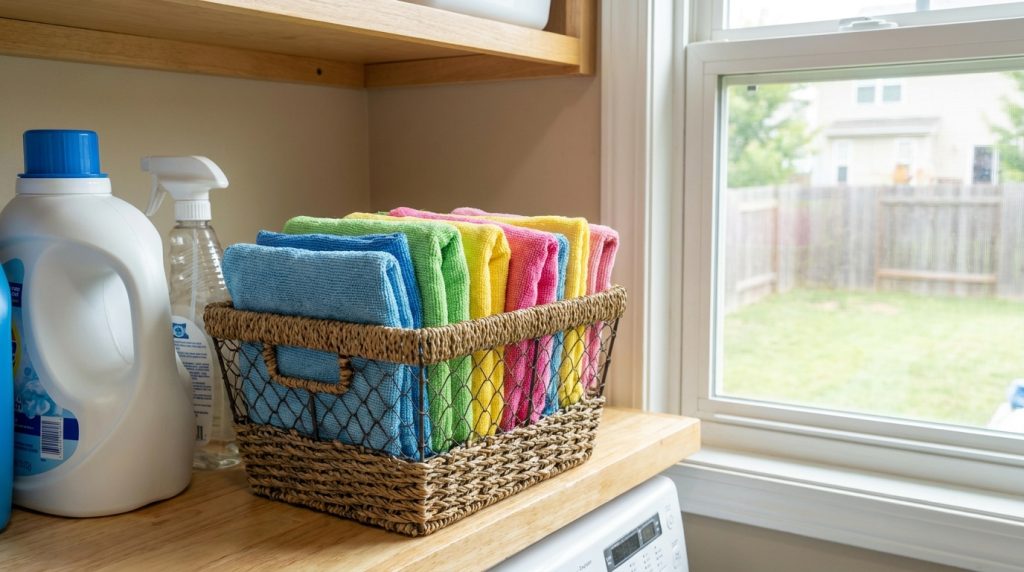
The trick is not to buy dozens of cloths at once. That makes it easy to refill the clean ones without having to dig through drawers each time.One refill basket often works better than draping cloths around several rooms. Some families store extras in the laundry room and keep only a few in active areas such as the kitchen and bathrooms. That small reset can make counters feel less cluttered while keeping wipes within reach.What’s helpful is that the system promotes fast habits instead of larger weekend cleaning marathons. If clean cloths are in sight and easy to replace, folks are more likely to wipe small spills right away rather than waiting for crumbs, fingerprints or splashes to accumulate later.The basket method can also help smaller apartments to avoid looking overloaded with disposable supplies in cabinets. A small stack of microfibre cloths usually takes up less space than a bunch of bulky paper towel packs stored under the sink.
When the Quick Wipe Is Enough and When It Helps to Wash the Cloths
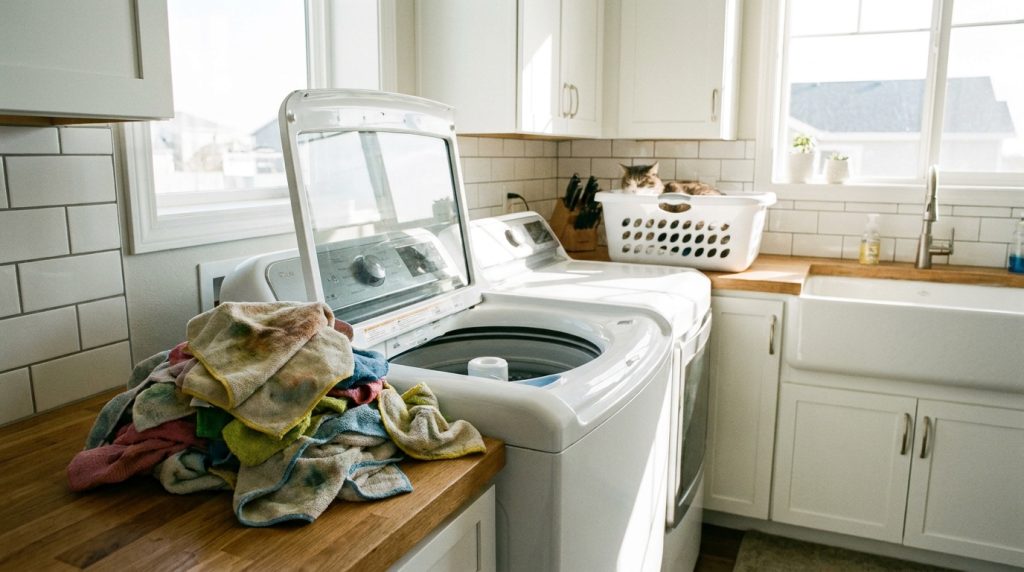
The benefit is you don’t have to wash cloths after every single swipe. Many households just collect lightly used cloths in a small mesh bag or laundry basket until regular wash day arrives.A soft routine often makes the system feel manageable. Some people will wash off cloths after using them in the kitchen, let them dry and then put them in the laundry at a later time. Others change fresh cloths daily or every couple of days depending on how heavily they are used.The most important clue is usually texture. If a microfibre cloth feels stiff, too wet or less absorbent, it may be time to wash it before putting it back in the rotation.The reason the swap works is that you keep yourself flexible instead of treating it like another chore system that needs constant maintenance. In many U.S. homes, the microfibre cloth habit is best suited to quietly supporting moments of quick cleanup, rather than becoming a strict routine.The useful part is not changing all the paper towels overnight. It’s about the little patches where disposable wipes go away fastest in everyday life. Those little messes always seem easier to handle when you’ve got a soft cloth sitting nearby the counter, sink or coffee maker. Over time, the kitchen starts to feel calmer, less cluttered, and easier to reset between busy moments without adding a bigger cleaning project to the week.