Even after sweeping, mopping, and tidying up, a room can feel a little undone when little corners of the floor gather dust, crumbs, pet hair, lint, or dirt tracked in. In many American houses, these lost edges are adjacent to kitchen toe-kicks, couch legs, sliding doors, laundry rooms, mudroom mats, and trash cabinets. This gallery is about the little floor details that often hide in plain sight, why they can affect the clean room feeling and what visual cues are worth checking during normal weekly cleaning.
Kitchen Toe-Kick Corners
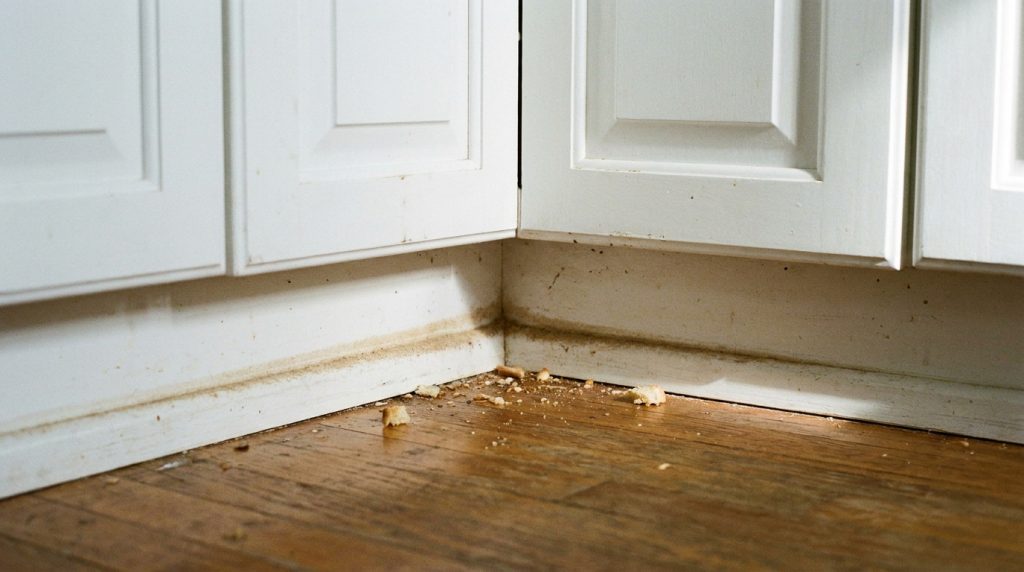
The low cabinet line in the kitchen could be clean.
Kitchen toe-kicks are designed to be set back from the front of the cabinet, making them comfortable to stand next to, yet easy to avoid when cleaning. In the average American kitchen, crumbs from toast, cereal, coffee stations and weeknight cooking can slide right into that recessed strip. First wet mopping may push tiny bits into the corner, so a vacuum crevice tool or dry microfiber pass before wet mopping may help. The payoff is visual: when that shadow line looks clean, the whole cabinet run can feel a bit more finished.
Dust Near Couch Legs
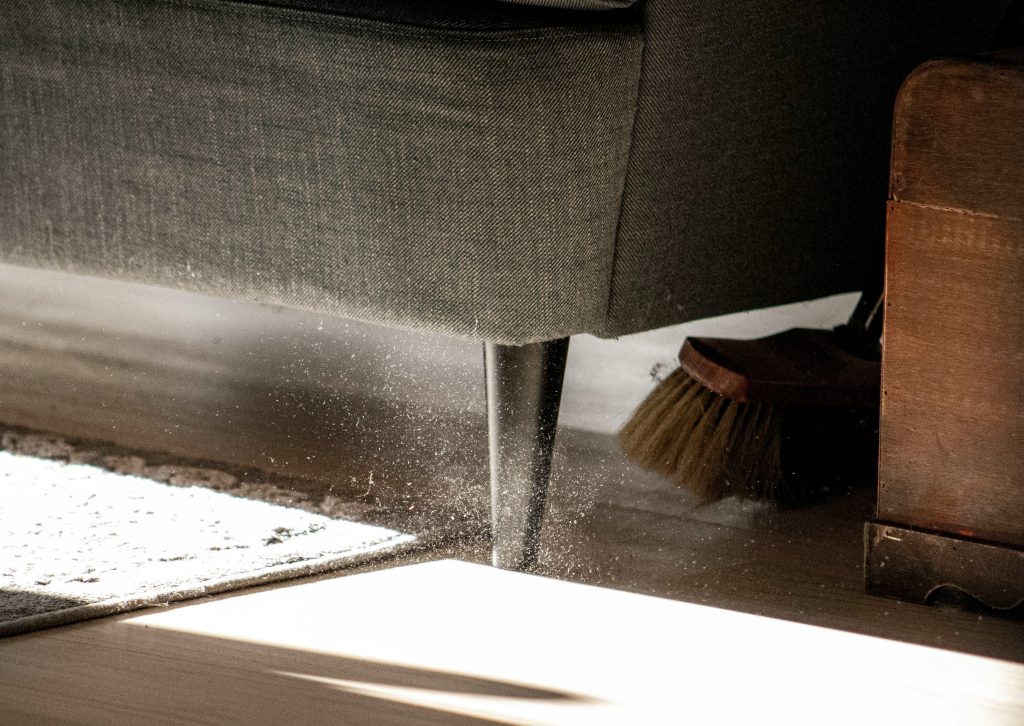
Maybe the dust line keeps showing up because the couch is hiding it
Dust can gather in the corners of couch legs because the furniture prevents a complete sweep. From standing height, the room may look tidy. But bright light across hardwood, laminate or vinyl plank can reveal little gray pockets near each leg. This is less about a cluttered home and more about reach in many U.S. living rooms. A flat vacuum attachment, microfiber duster or the occasional move of furniture can help reset the edges. A quick visual lift of the front legs first, and you don’t have to turn cleanup into a furniture moving project.
Crumbs Under the Breakfast Table
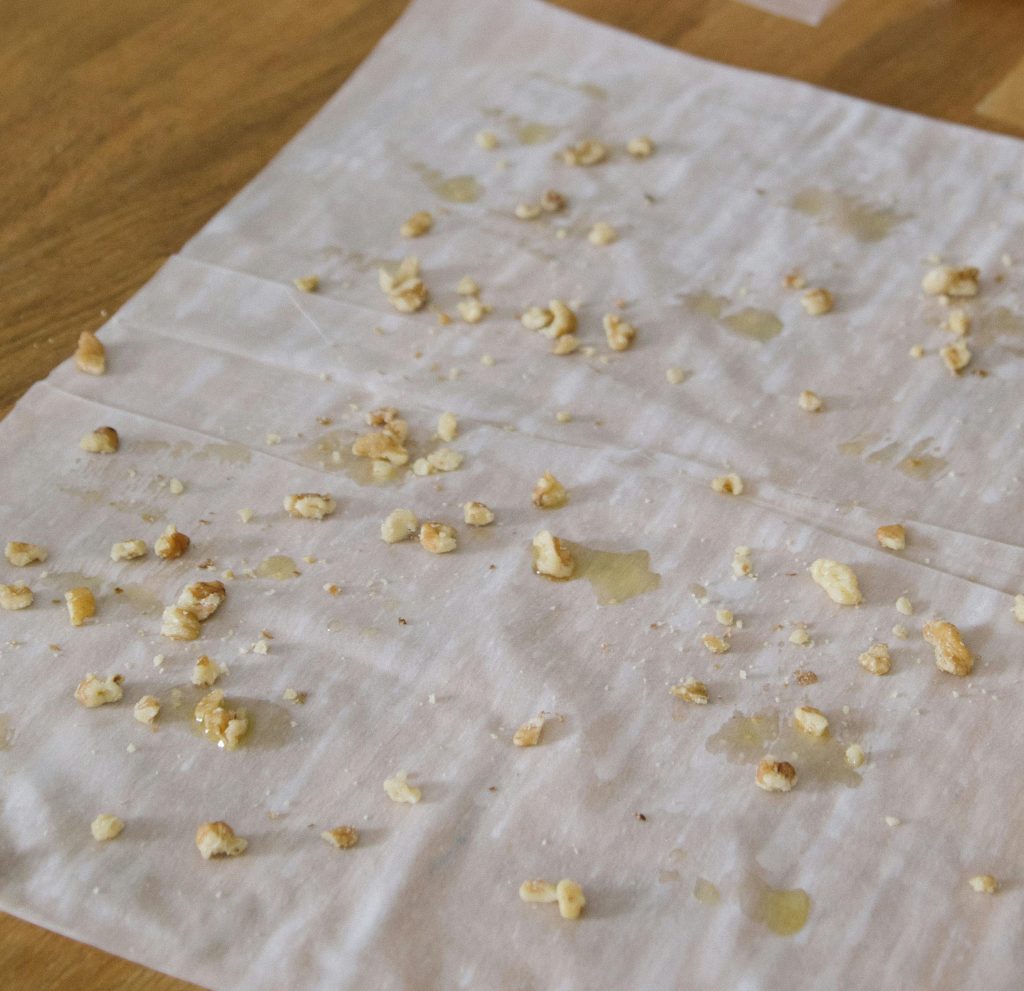
A clean table still leaves a messy looking corner of the floor.
Many U.S. homes are crumb magnets, especially if you have kids, with rushed school mornings, cereal, toast and snack plates, in the breakfast nooks. The center open floor can be swept and the corners under chair legs get a lighter pass. That little ring of crumbs can make the space feel unfinished, even if the tabletop is spotless. A quick vacuuming of the wall-side legs just before the dry pass is an easy way to make the space feel cleaner without a deep clean every morning.
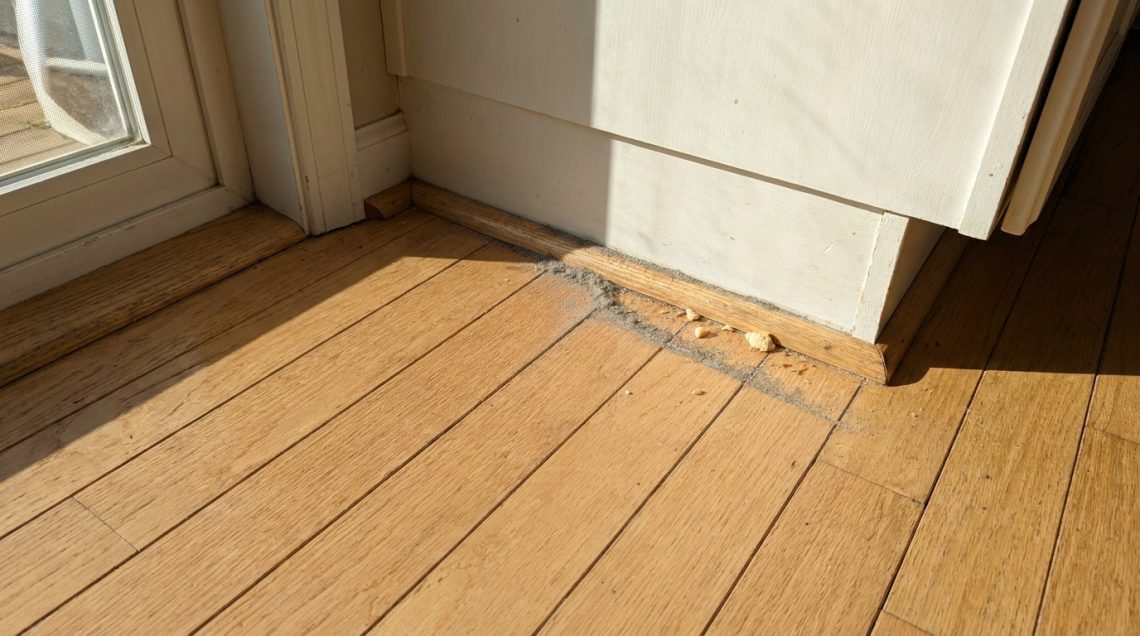
Dirt Near Sliding Door Tracks
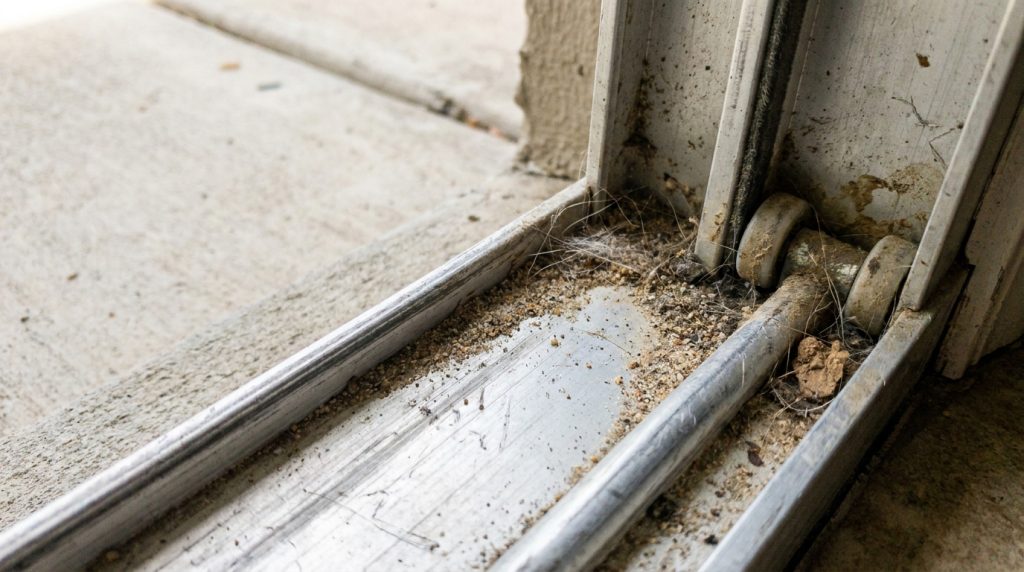
The dirt the mop misses might be in the corner of the patio door.
Sliding door tracks are where indoor floors meet patios, decks, yards and dog traffic. Even when it’s mopped, the track can leave a gray line of grit that makes the doorway less fresh. A dry brush and vacuum pass first can help, as adding moisture too early can turn loose dirt into a paste. If you have a lot of traffic in your backyard, this little track reset can make the whole door area look cleaner and may help make the entrance feel less gritty underfoot.
Hallway Wall Corners
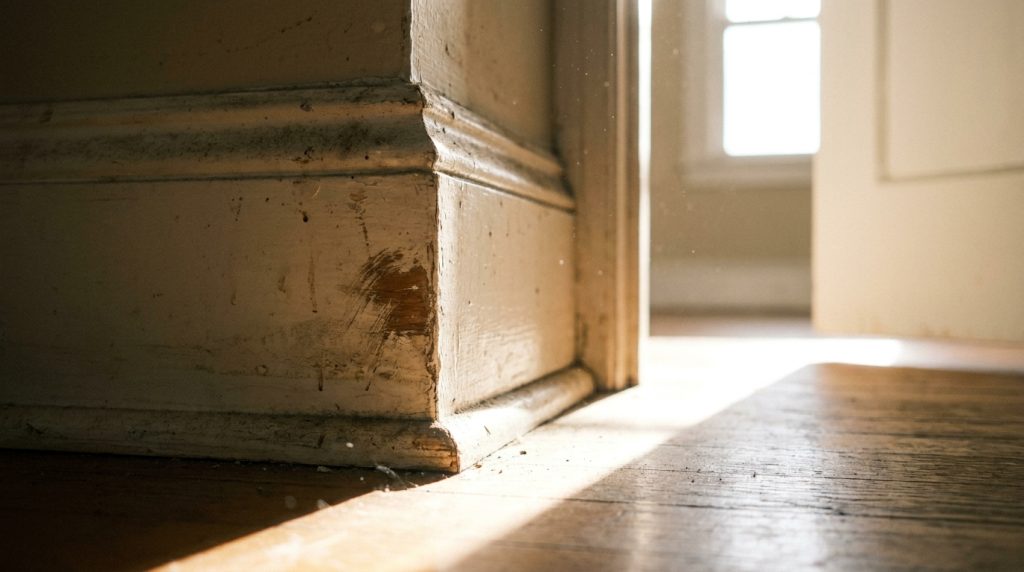
This slight slope of the hall can make the wall look unfinished.
Hallway wall corners are often forgotten because they are not as conspicuous as counters, sinks, or floors in the center of a room. But in older homes, rental units and busy family hallways, dust can collect where the baseboard meets the floor. Brush attachment or dry microfiber cloth to loosen the line before a damp wipe. A light touch usually works best for that clean-room feel, as too much soapy water can leave behind a residue. This can be subtle but is percussive on side lighting.
Pet Hair Near Rug Edges
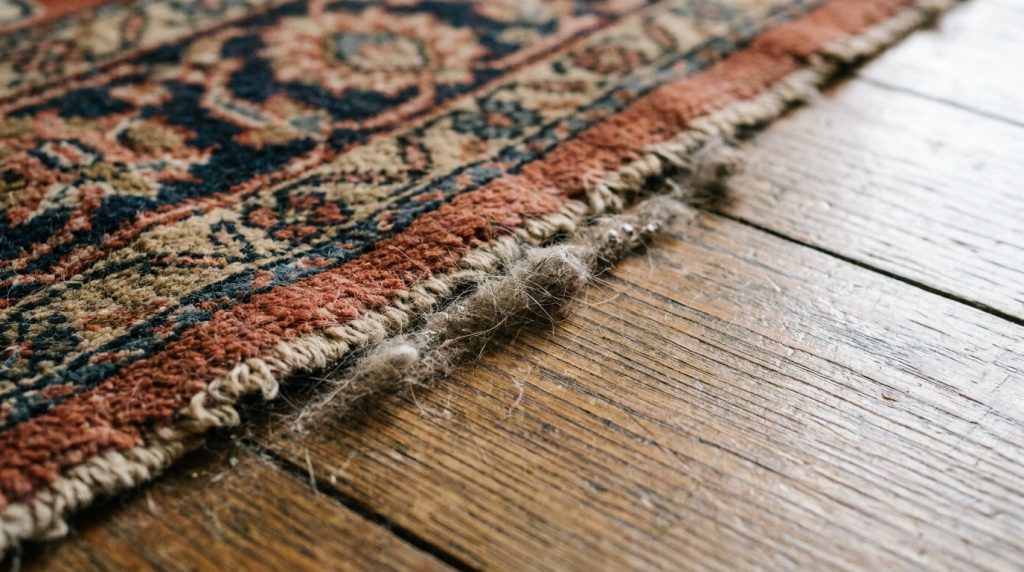
The rug’s edge might be showing what the vacuum left behind.
In homes with dogs or cats, rug edges can be like little boundaries that trap fur, lint, and dust. The center of the floor may appear clean, but the edge where the rug meets the hardwood, tile or vinyl can still look fuzzy. That edge is often found near couches, pet beds and high-traffic paths in apartments and family rooms. A gentle vacuum along the border or a rubber broom-type tool can help lift the hair before it spreads. It’s a small thing, but it can make the entire seating area feel more put together.
Dust Behind the Door Swing
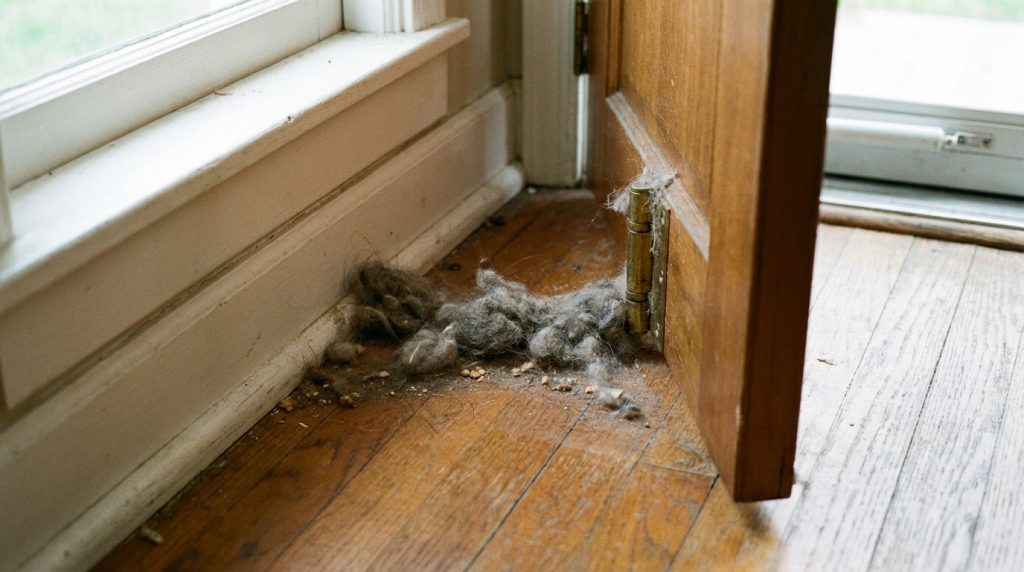
Every time you clean, you might be covering up a dusty corner.
Behind-door corners in bedrooms, bathrooms, pantries and laundry rooms are classic overlooked spots. The door blocks the view and the cleaning path and the corner may be noticed only when the door is partly closed or sunlight hits the floor. In many American homes, a weekly quick sweep totally misses this triangle. Open the door all the way and run a crevice tool or microfiber cloth along the baseboard on the hinge side, and you can eliminate that dust line that makes a clean room feel just a little bit off.
Laundry Room Floor Corners
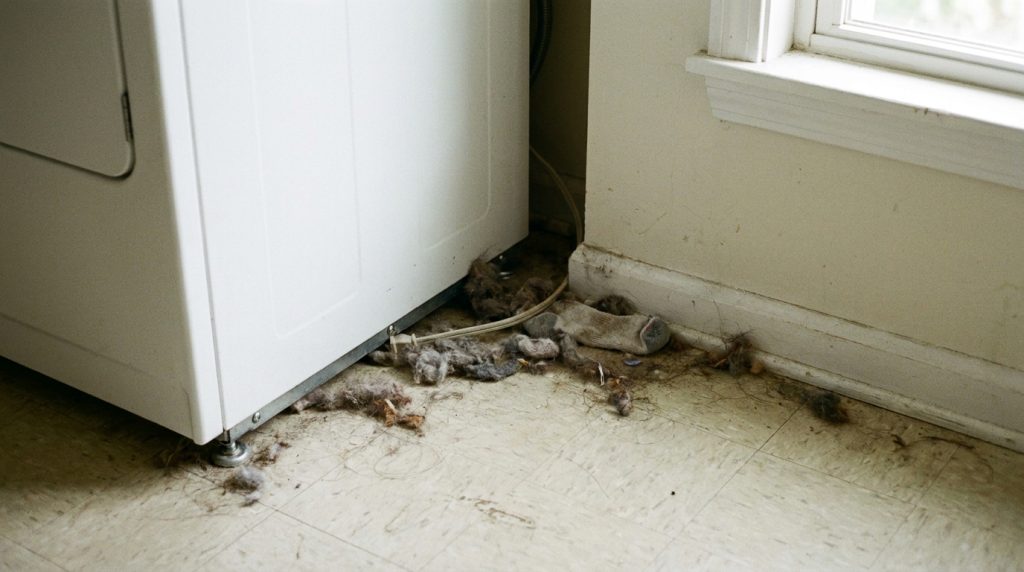
Laundry rooms can look clean, but lint can be lurking at the edge of the machine.
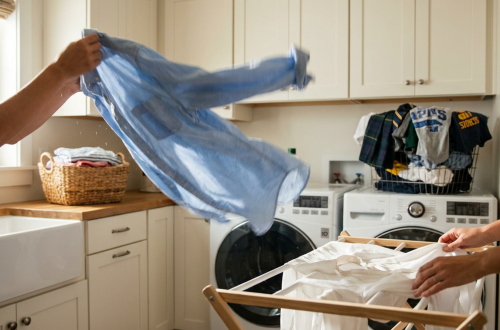
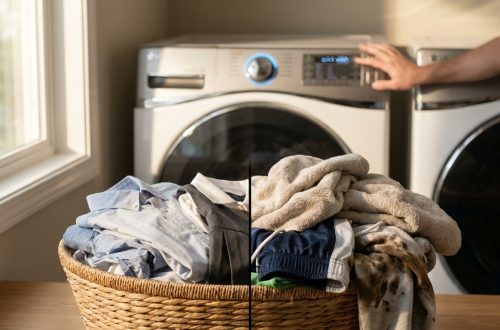
Any laundry room will naturally produce lint, dust, hair and small pieces of fabric fluff. These bits can accumulate in corners too tight for a mop head around the bases of washers and dryers. In many American homes this space is crowded with hampers, bottles of detergent, and pet towels, too, so the floor edge gets omitted. A dry vacuum pass before damp cleaning is usually more effective than pushing lint around with a wet mop. It’s a quick fix that can make a small laundry room feel less dusty and more finished.
Mudroom Mat Edges
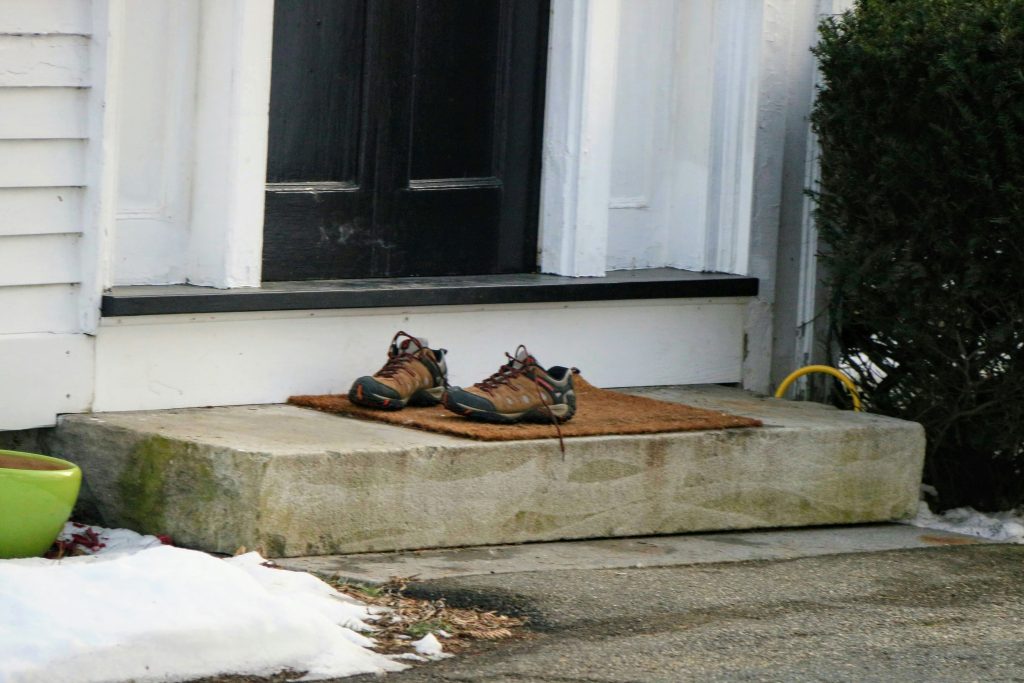
The entry mat can hide a dirt line just where shoes land.
Mudroom and entry mats do a good job, but their edges can trap grit, grass, salt, pet hair and driveway dust. This can be more noticeable in the midwest and northeast in the winter and rainy or muddy areas year round. The floor may look clean until the mat moves and exposes the border below. When vacuuming, lift the mat and clean the edge line before putting it back. Otherwise the entry will feel gritty. It also makes the first step into the house look more cared for.
Corners Around the Trash Cabinet
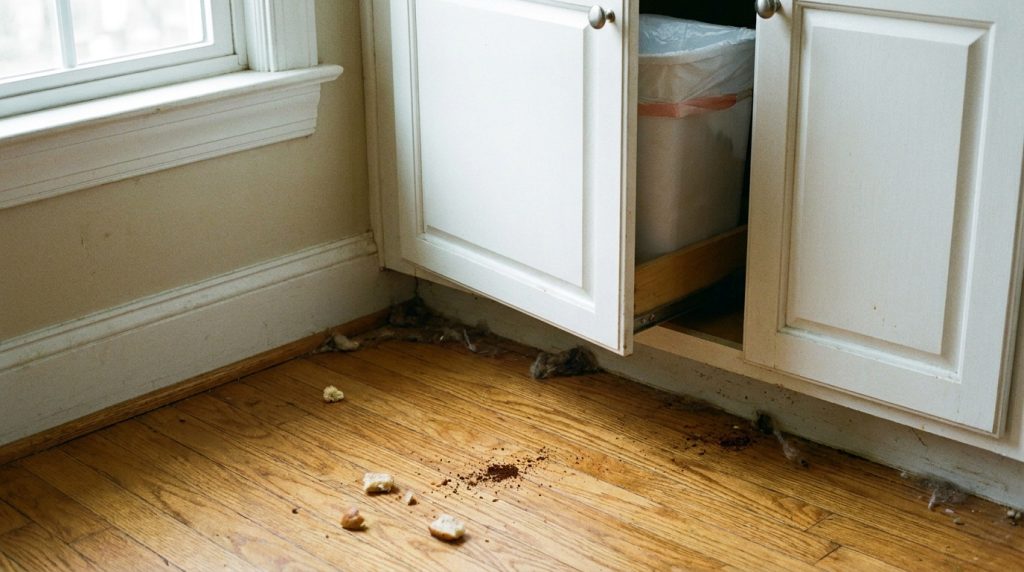
This part of the kitchen can spoil the freshly mopped feel.
Kind words and simple visuals are the best way to deal with trash cabinet corners. A few crumbs, a line of dust, or a dull patch on the floor is enough. Little bits fall when bags are changed, wrappers are tossed or the pull-out cabinet opens and closes in many U.S. kitchens. It may not look messy from across the room but it can affect the fresh kitchen feeling up close. Dry pickup, then a light floor wipe usually prevents the corner from becoming a repeated trouble spot after normal cooking and grocery routines.