Grease in a typical American kitchen rarely stays in one obvious place. A stovetop splash, a used sponge, a hurried paper towel wipe, or a grubby range hood can stealthily spread oily residue across counters, cabinet handles, backsplash tile, and even nearby small appliances. Many people do a quick tidy up after dinner, because the kitchen “looks better.” But some shortcuts can leave a thin film that catches dust, smells stale and makes the next mess harder to clean. In this gallery, we dissect the small grease-cleaning mistakes that can make a kitchen feel dirtier again by morning, and the simple order changes that help prevent grease from traveling.
Wiping the Stovetop Before Loosening the Grease
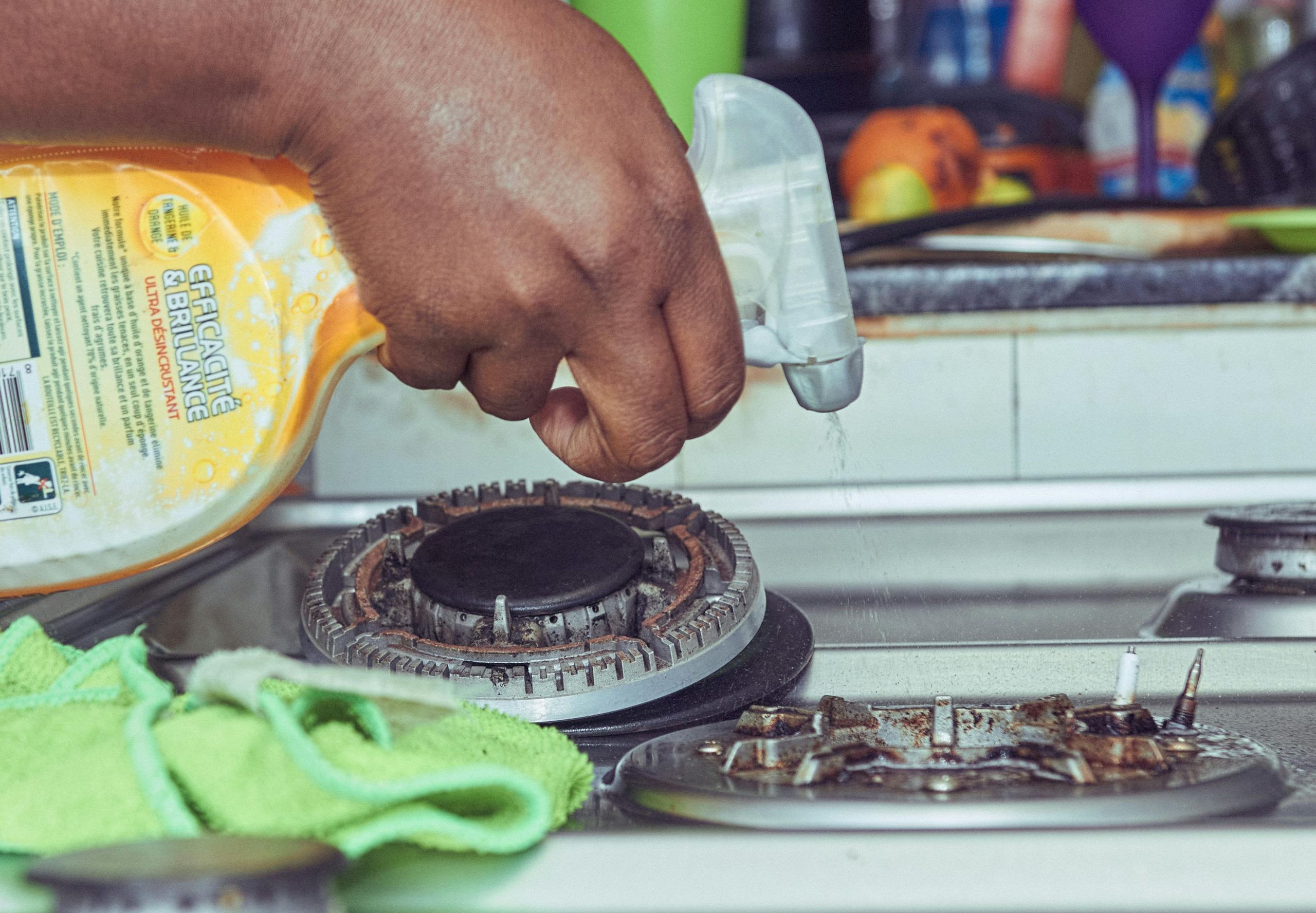
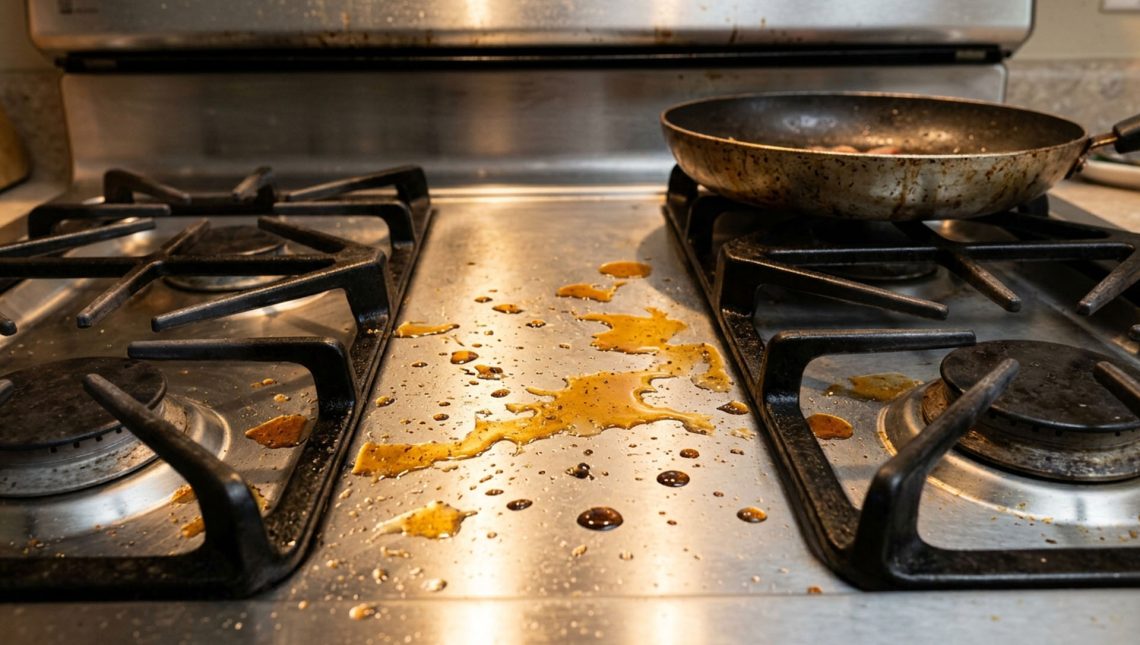
A quick wipe of the stove top may just be pushing dinner grease around. A greasy stovetop might seem like it only needs a quick pass, especially after bacon, burgers, stir-fry, or fried potatoes. However, if the oil is still on the surface, a dry paper towel or a barely damp cloth can drag it out rather than lifting it away. This results in a thin film around burner edges, knobs and the line of the backsplash in many U.S. kitchens. While the surface may not look as shiny for a few minutes the residue can pick up dust and food crumbs later. Better is to let a grease-cutting cleaner or a warm, soapy cloth sit for a little while, then wipe down in controlled sections, using a clean side each time.
Using the Same Sponge From Sink to Stove
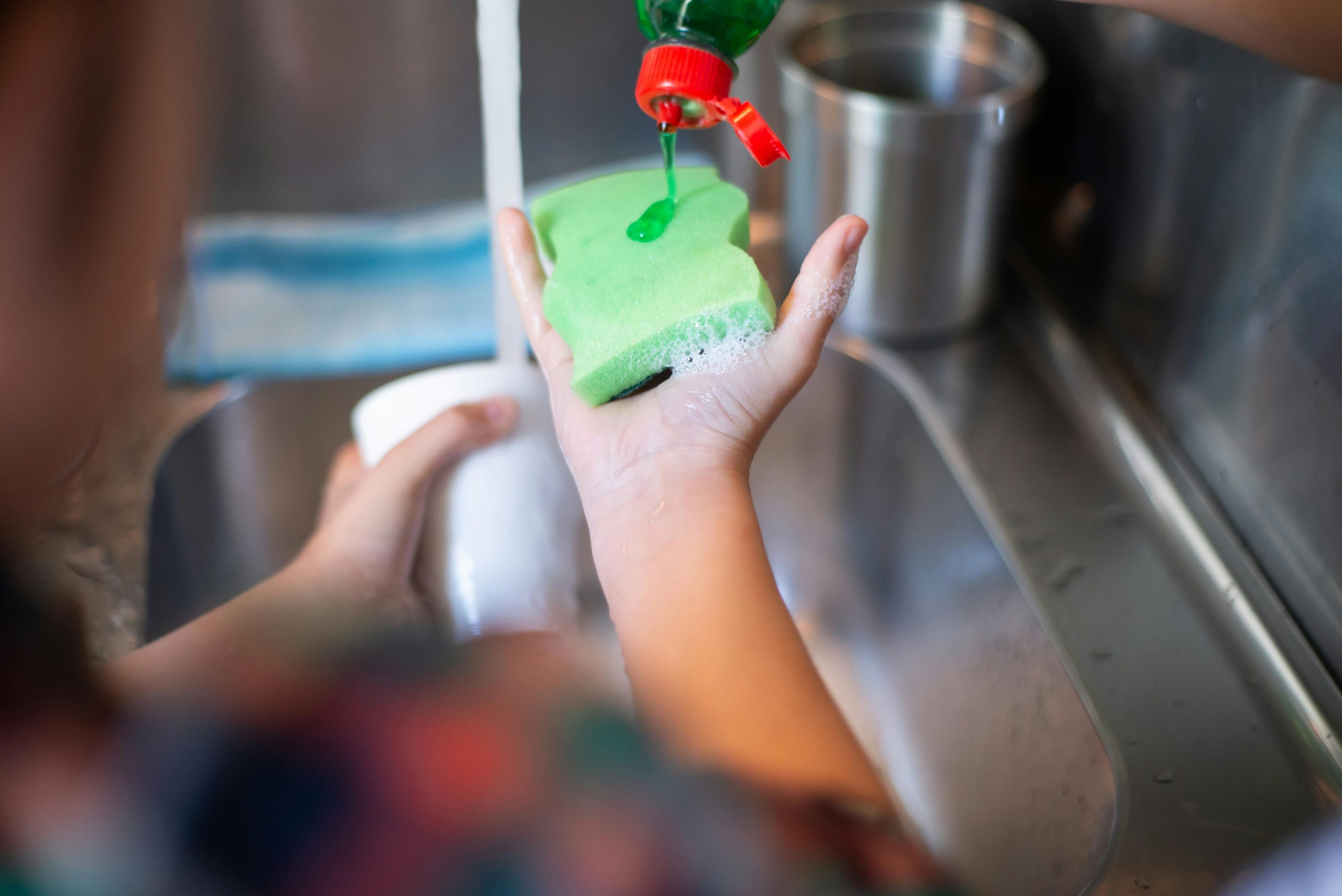
The “sponge that cleans everything” can be the thing spreading grease It might be the easiest option after cooking, but a kitchen sponge can be a breeding ground for oily residue from pans, plates and sink water. If you take the same sponge to the stove, backsplash, microwave handle or counter edge, it can leave a light greasy film. That’s why in the average American kitchen, a counter may seem a little sticky even when it’s been “cleaned.” Add to that the sponge not being rinsed well between jobs or using cold water that does not break down oil as easily and the problem is compounded. Use a different cloth for greasy stove work, rinsing often and finishing with a clean towel.
Cleaning the Counter Before the Range Hood
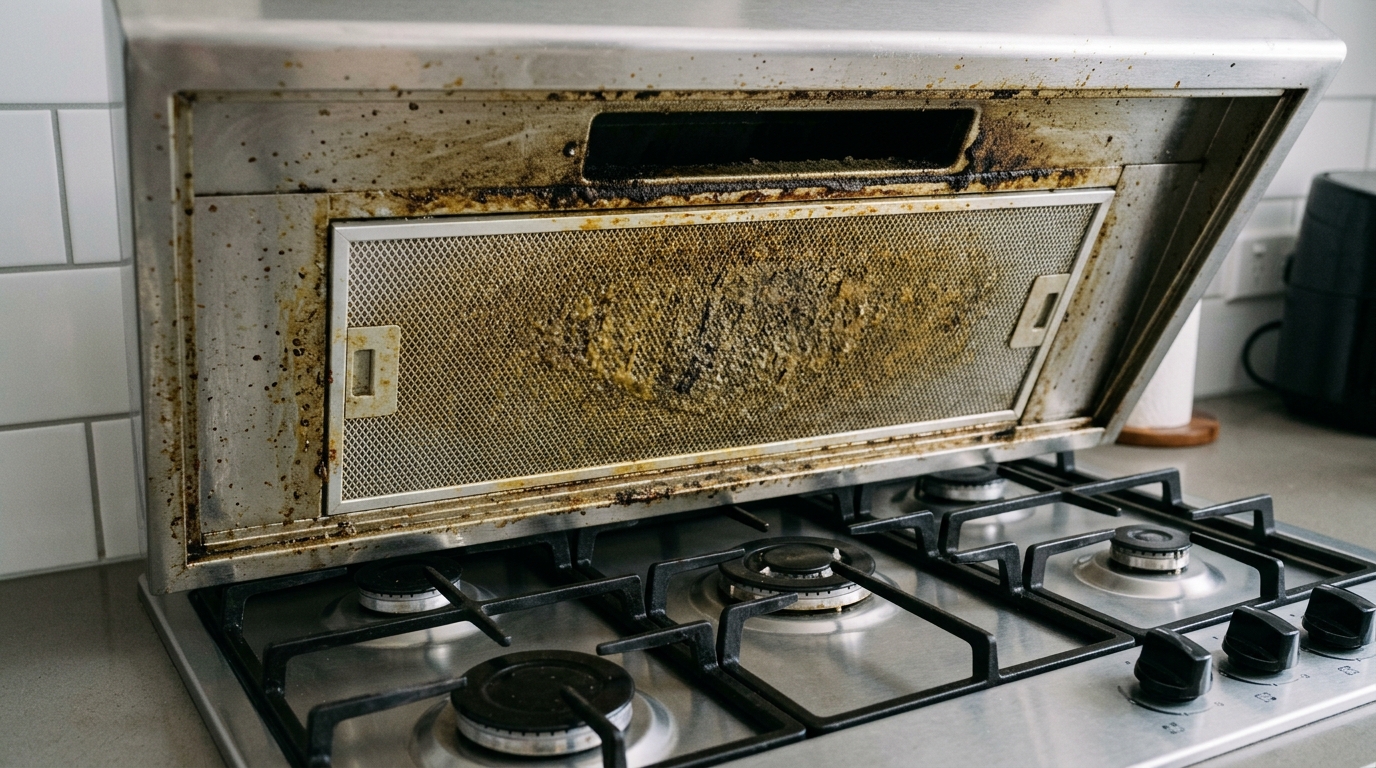
If the range hood is still greasy, your clean counter won’t stay clean. The range hood is one of the easiest kitchen areas to overlook as it sits above normal eye level. But in many homes in America, especially those that favor frying or skillet meals, grease accumulates on the hood surface and filter. If you clean the counter, backsplash and stovetop first, and then wipe down the hood afterwards, oily dust can fall or drip onto the areas you just cleaned. That means it feels like the kitchen gets dirty too fast again. A better order is top-down: hood exterior, filter area, upper backsplash, stovetop and then counters. This allows the loosened residue to be transferred to surfaces that still need to be cleaned.
Spraying Cleaner Directly Into Thick Grease
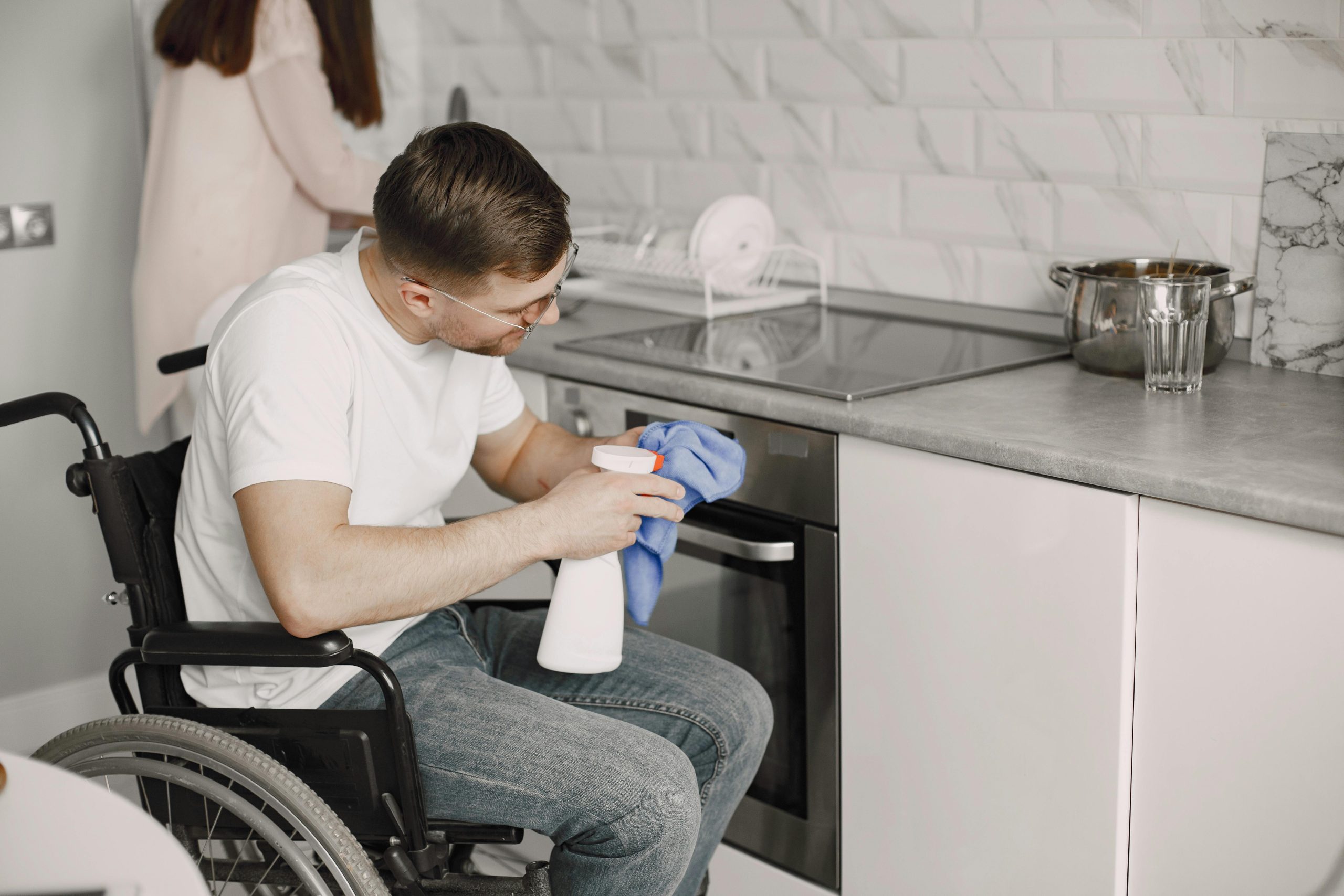
More spray doesn’t mean more grease is being removed. Spraying cleaner straight onto a heavy greasy patch can feel powerful but may create a slippery mix that runs down the backsplash or across the stove. This happens behind the frying pans, air fryers and sauté pans in many kitchens in the U.S. Instead of distributing oil evenly, excess liquid can carry grease into grout lines, seams of burners, and along counter edges. Usually the fix is slower, but cleaner: First, remove loose oil with a disposable towel or dedicated grease cloth, then apply cleaner and let sit briefly. Clean from the outside of the mess inward so the greasy area does not grow larger.
Reusing One Paper Towel Too Long
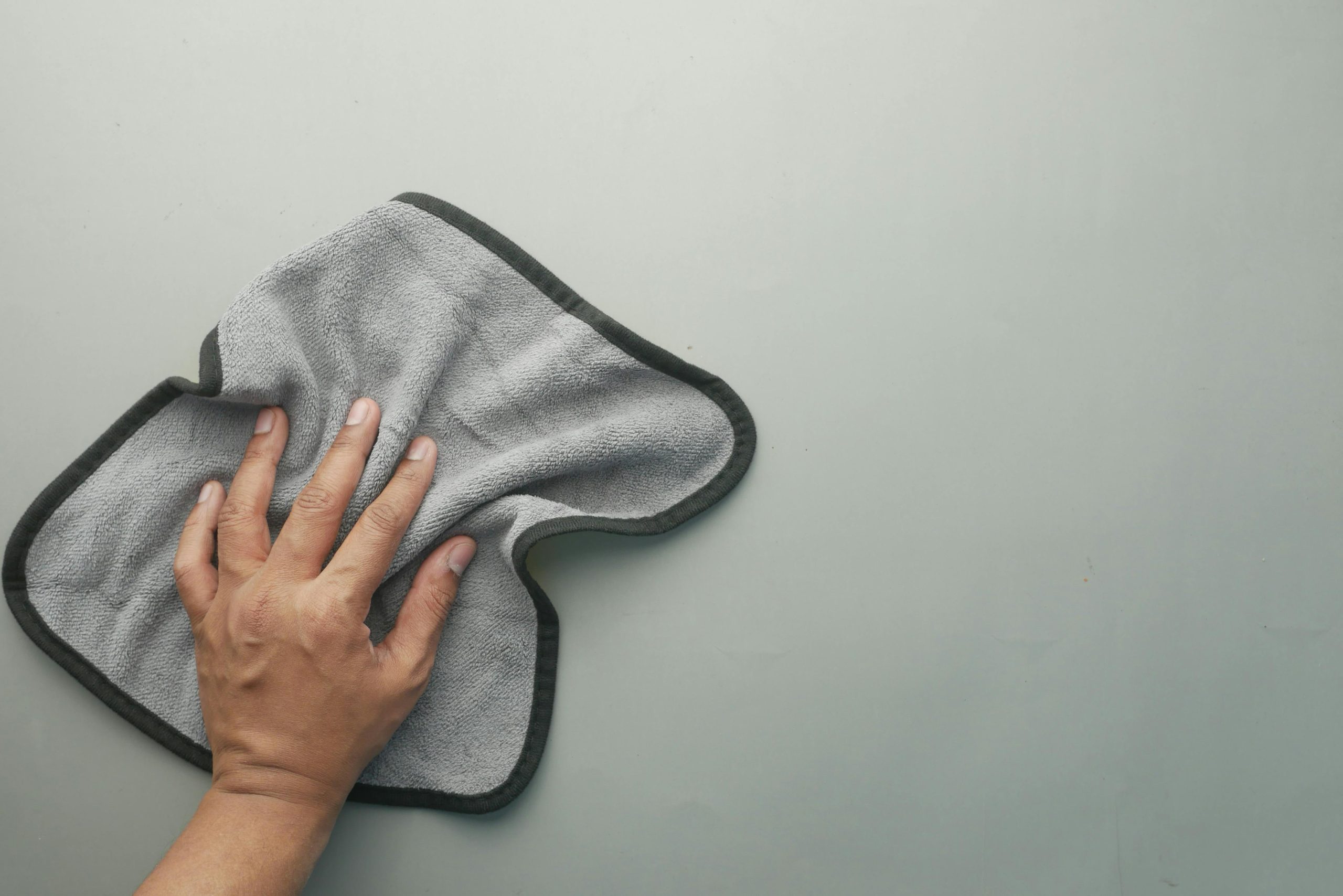
When a paper towel is full, it can become a grease brush. Paper towels are helpful to take off the first greasy layer, but they don’t help anymore when they are soaked. Then the towel can smudge oil on stainless steel, glass cooktops, laminate counters, and appliance fronts nearby. This is a typical American kitchen after weekend breakfasts, burger nights or deep pan cooking. The surface may look cleaner, the thick spots are gone, but still feel slick to the touch later on. The best shortcut is to fold the towel, use a clean section at a time, and change it sooner than it feels necessary. Don’t use microfiber or a clean cloth for the first greasy lift. Save it for the last pass.
Cleaning Cabinet Handles Last After Touching Grease
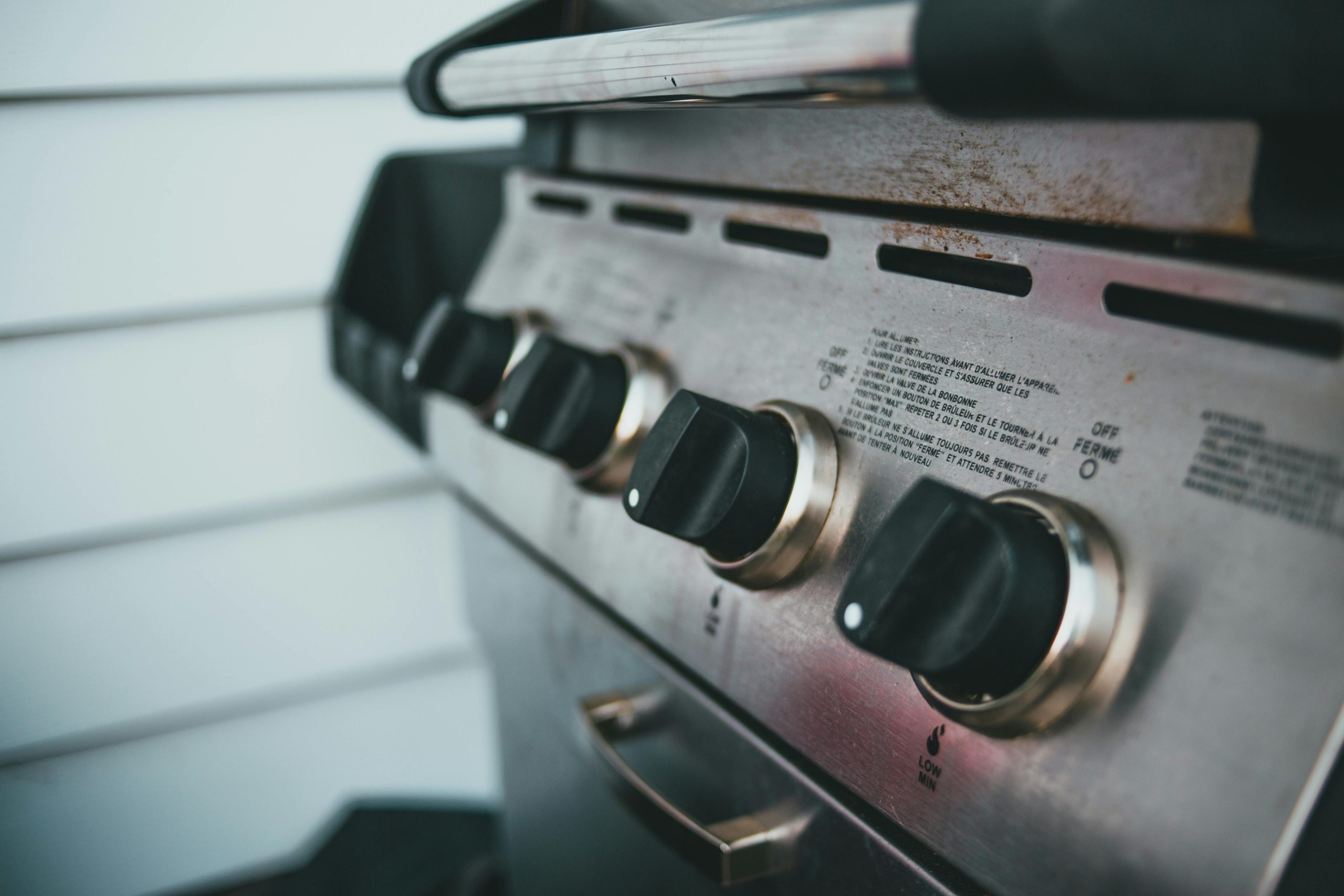
Greasiest spot? Doesn’t have to be the stovetop. Could be the handle you touch In many homes grease is not spread with cloth only. And it spreads by hands. Flipping food, moving pans, opening spice drawers, grabbing plates, reaching under the sink: greasy fingers can leave their mark on cabinet pulls, refrigerator handles, microwave buttons, and faucet levers. If you use the same cloth to clean these touchpoints last and wipe the stove, the grease just might move around again. Instead, a smarter move is to clean greasy touchpoints separately: stove knobs, nearby drawer pulls, fridge handle, faucet, and microwave panel. These small spots are also locations where guests may notice as they catch light and show fingerprints quickly.
Wiping Side to Side Across the Backsplash

A side-to-side wipe can force grease right into grout lines. Backsplashes are there to catch the little bits of oil that fly out of your pan when you’re frying, the splatters of sauce, the steam that comes off greasy foods. When a cloth is wiped side-to-side across tile, it can force residue into grout lines, corners and the thin seam where the counter meets the wall. In older homes and rental apartments, those seams may already be full of dust and crumbs, so grease darkens them up faster. A better way is to work in small sections and wipe down or in toward the cloth and keep changing to a clean section. For grout, a soft brush and mild grease-cutting cleaner can help lift the buildup rather than spreading it into the lines.
Waiting Until Grease Turns Sticky
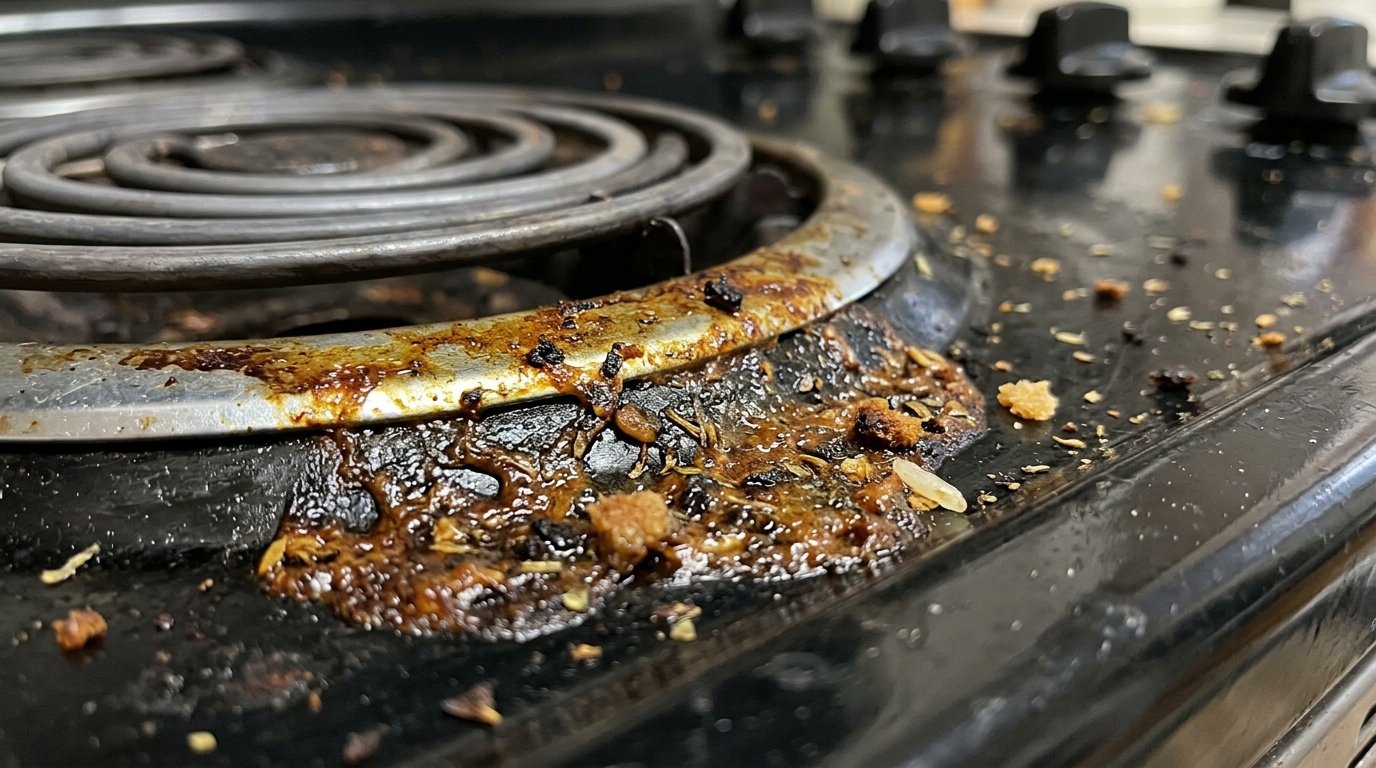
Grease that sits around for too long can become a sticky dust catcher. Some people wait until the kitchen is completely cool to wipe down. That may be safer around hot burners, but grease sitting on the stove for hours can get thicker and stickier. That residue can trap crumbs, pet hair, dust, and seasoning particles around stovetop seams, burner rings, and counter edges. Hence, the dirty look of the stove again in many US homes even after a “quick clean”. The safest middle ground is not to clean hot burners, but to clean splatter when it is fresh and surfaces are safe to touch. Warm soapy water or a suitable degreaser normally works better before the oily layer hardens.
Skipping the Clean Water Final Wipe
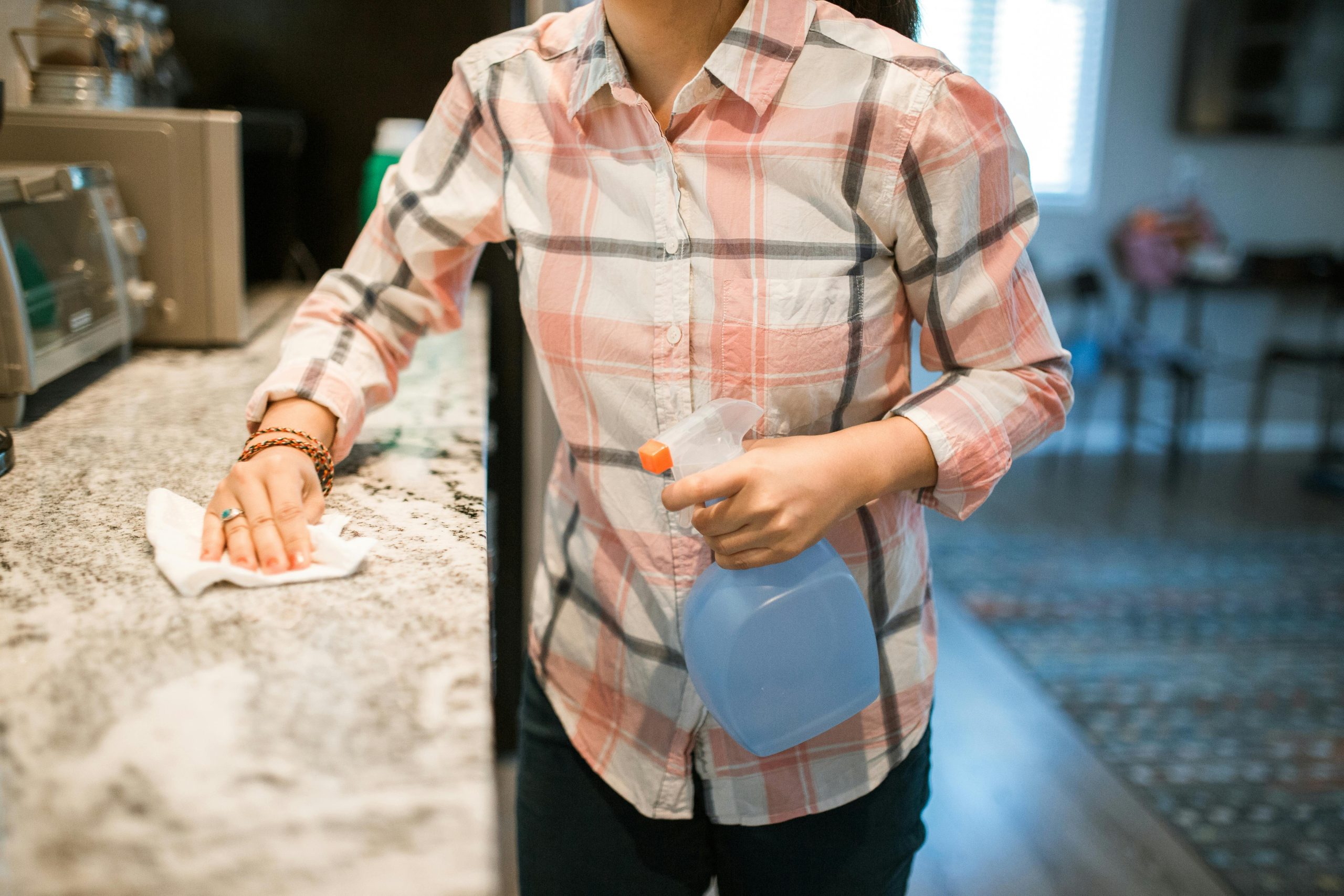
A kitchen can look clean until the light hits the leftover film. If you’re using a degreaser or soapy cloth, you can skip the clean-water wipe at the end to leave a faint layer behind. That layer can be made up of loosened grease, cleaning residue and small particles of food. It often appears later as cloudy streaks or a sticky feel on dark counters and stainless steel and glass cooktops. In an average American kitchen, this can cause people to use more cleaner the next day, perpetuating the cycle. A final wipe with a clean damp cloth, to remove what the first wipe has loosened. Then drying with a clean towel avoids water spots and streaking from making the surface dirty again.
Forgetting the Grease Around Small Appliances
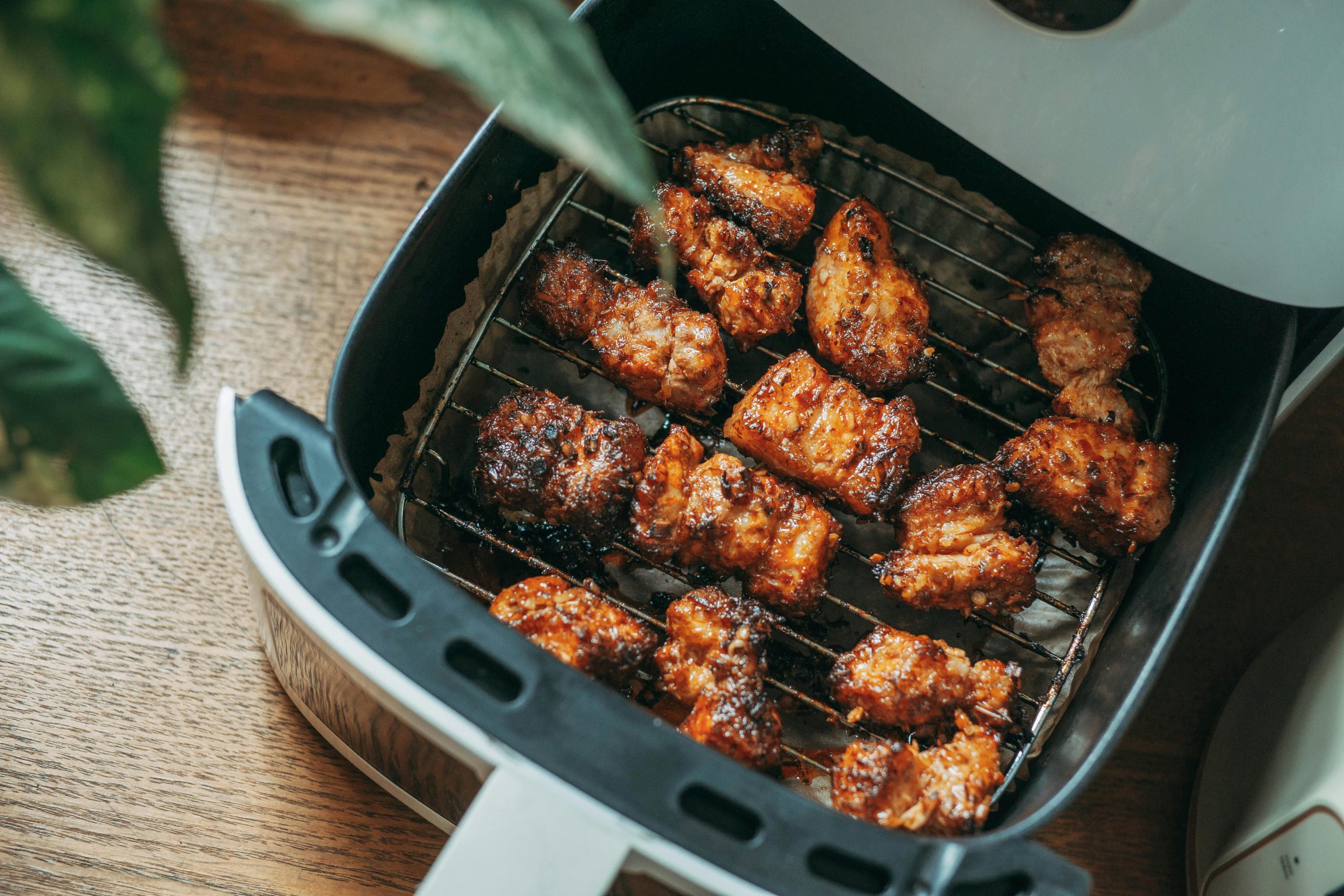
The appliances on the counter might re-grease the counter. People wipe around them, not behind them. Small appliances create hidden grease zones. Oily dust can build up on air fryers, toaster ovens, griddles and even the wall behind a coffee maker sitting next to a stove. In many U.S. kitchens, where counter space is at a premium, these appliances remain stationary for weeks, so crumbs and grease accumulate along the base. If the counter is cleaned quickly, that hidden residue can smear back out the next time the appliance is moved. Better weekly habit is to pull each appliance out one by one, wipe the wall and counter behind it, dry it, and push it back in.