In many U.S. kitchens, the dish rack quietly becomes a second countertop: cups sit there, plates pile up, utensils scatter and the clean-room feeling disappears even after the dishes are cleaned. This gallery features small-space drying swaps that can help the sink area feel less cluttered without making dishwashing a bigger task. From roll-up racks to drying mats to utensil cups to under-sink storage to the one-stack rule, each of the ideas solves real-life household problems: crowded counters, dishes that take forever to dry, small apartments, busy family kitchens and after-dinner resets that make the next morning easier.
The Roll-Up Rack That Clears Counter Space After Dishes Dry
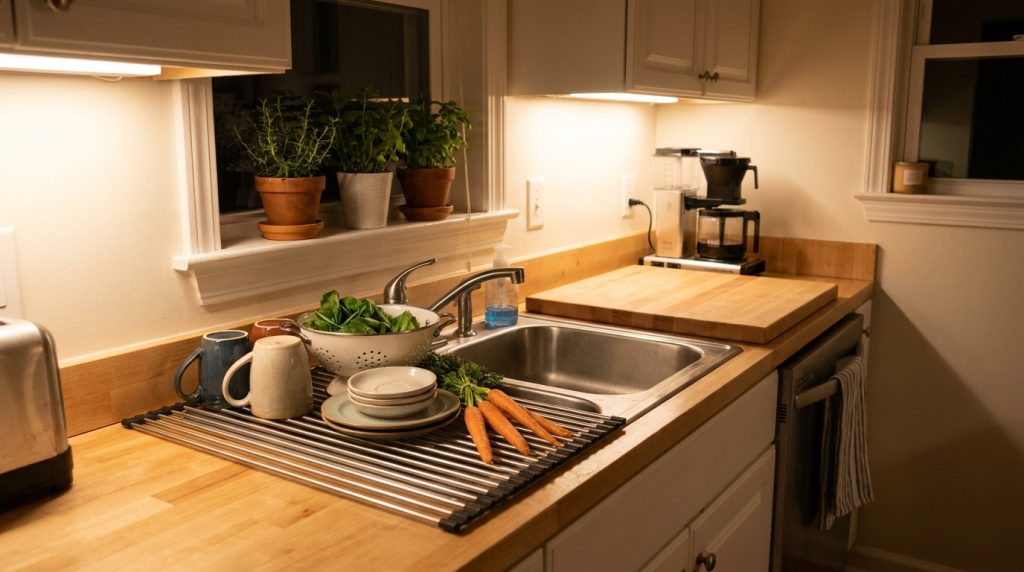
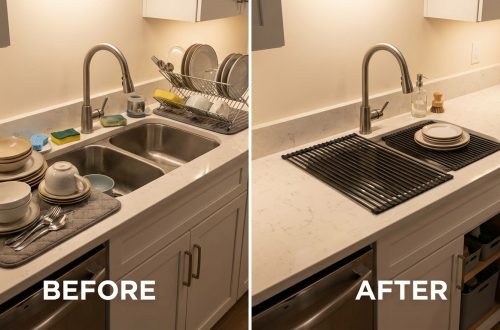
A pull-out dish rack may be the counter-space trick many small kitchens need.
Instead of having a bulky rack sitting on the counter all day, a roll-up rack turns the washbasin into a temporary drying zone. For a typical American flat kitchen that means the coffee maker, cutting board or prep space is finally freed up again. The swap is best for light daily loads: mugs, plates, rinsed produce and a few hand-washed items after dinner. The good habit is to put the rack away when everything is dry so it doesn’t become just another permanent landing spot. If you’re a renter or have a small household, this keeps the visual clutter low and doesn’t require a cabinet remodel or bigger kitchen.
Why Bulky Dish Racks Can Make Small Kitchens Feel Crowded
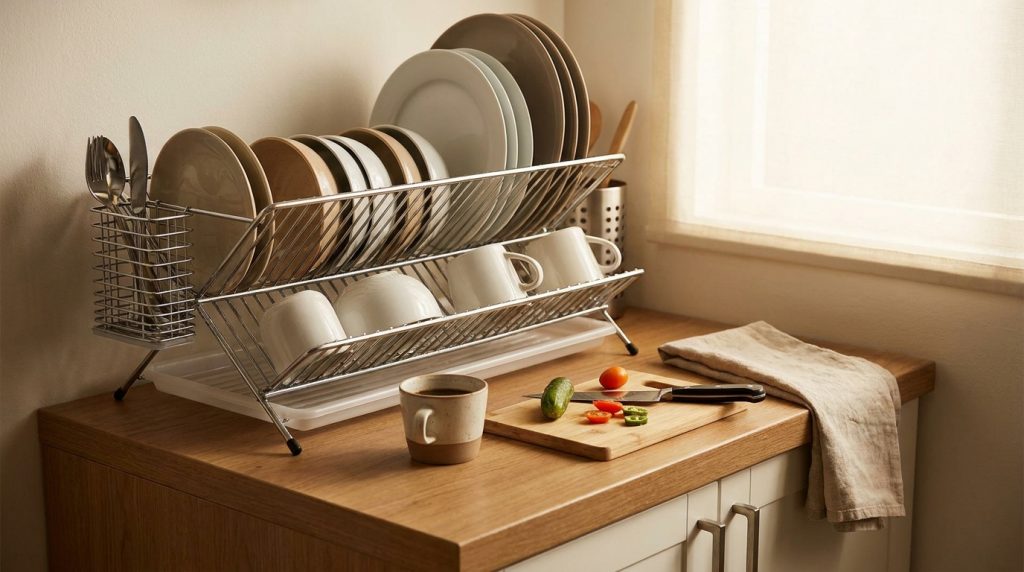
The rack might be clean but still feel crowded on the counter.
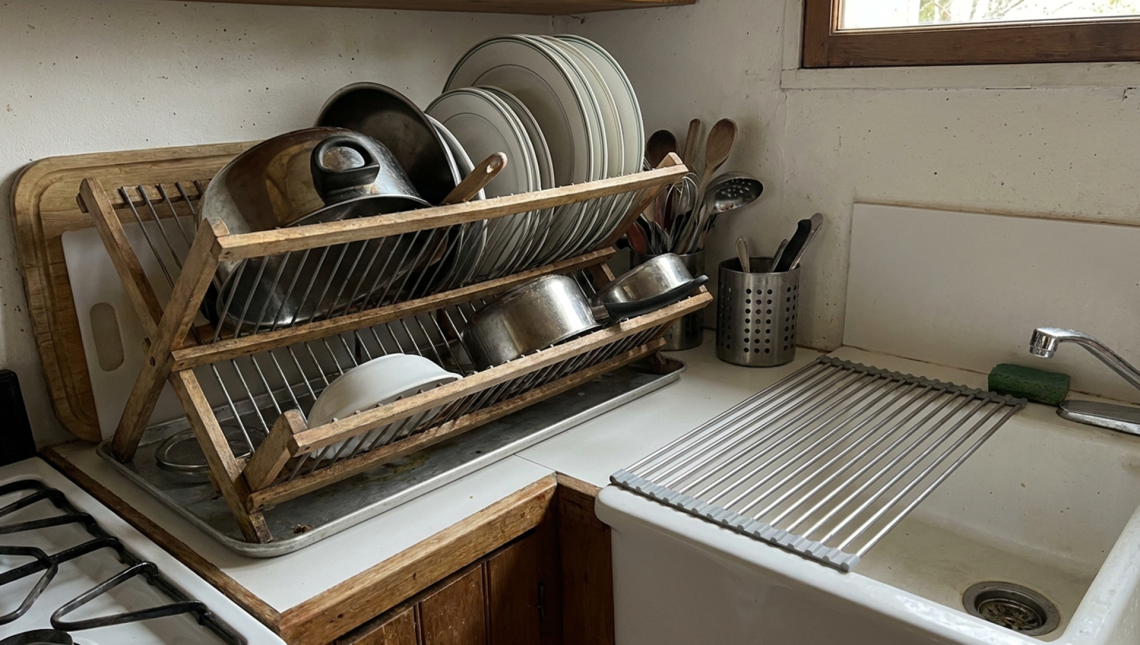
A conventional dish rack can be handy, but in many American homes it also becomes the biggest thing around the sink. That matters in galley kitchens, rental apartments, starter homes and busy family kitchens where every square foot of counter is on duty. Even if the dishes are clean, the rack can make the room feel less reset because you can still see it once the chore is done. A safer way is to match the drying tool to the load: a large rack for a heavy dish day, a foldable rack or mat for weeknights, and a clear counter when the dishes are dry. The goal isn’t perfection, it’s to keep the washbasin area from becoming permanent storage.
The Sink-Side Mat That Works for Quick Loads
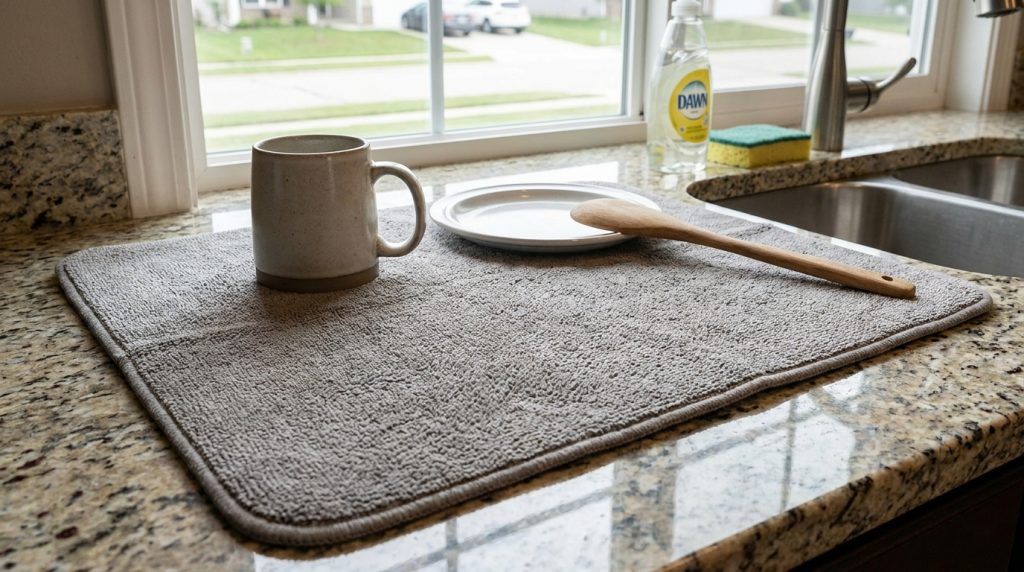
If you only have a few things in your washbasin, a drying mat may be all you need.
If you’re in a hurry, a drying mat can be the kinder compromise between a full-sized rack and dishes strewn on a towel. Especially nice after a grocery prep rinse, or a coffee cup reset, or a small lunch cleanup. The good thing is the mat can fold, hang or take a trip through the wash, depending on the material and care label. This means a lot of American kitchens can get their counter space back after the dishes dry. Best visual cue: if the mat is still there hours later with random cups and lids on it, it may have become a second clutter zone, rather than a quick drying station.
Where Wet Cups Can Dry Without Spreading Across the Counter
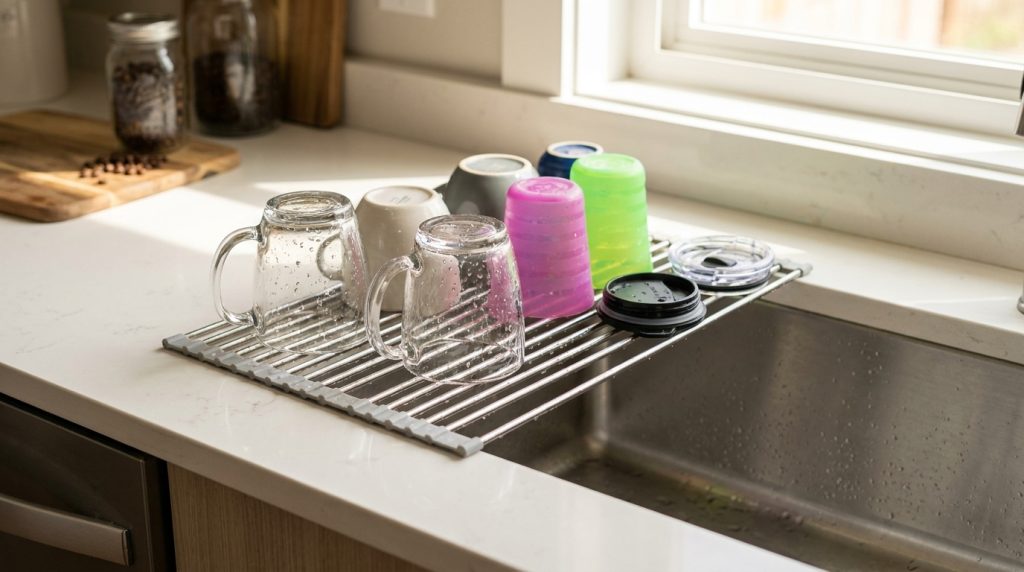
Wet cups can quietly take over more counter than plates can.
Cups are small but they multiply fast around a washbasin. A few water glasses, coffee mugs, kids’ cups, and travel lids in a family kitchen can spread out into quite a drying sprawl. The roll-up rack or narrow drying strip is one defined place for them to land, particularly when the cups are inverted so air can circulate around them. It’s not about making the washbasin look staged it’s about stopping little wet items from taking over the entire counter. Usually they are dried and then immediately put into the cabinet. That one step keeps the drying zone short-lived and makes the next meal prep seem less daunting.
The Utensil Cup Trick That Keeps Forks and Spoons Contained
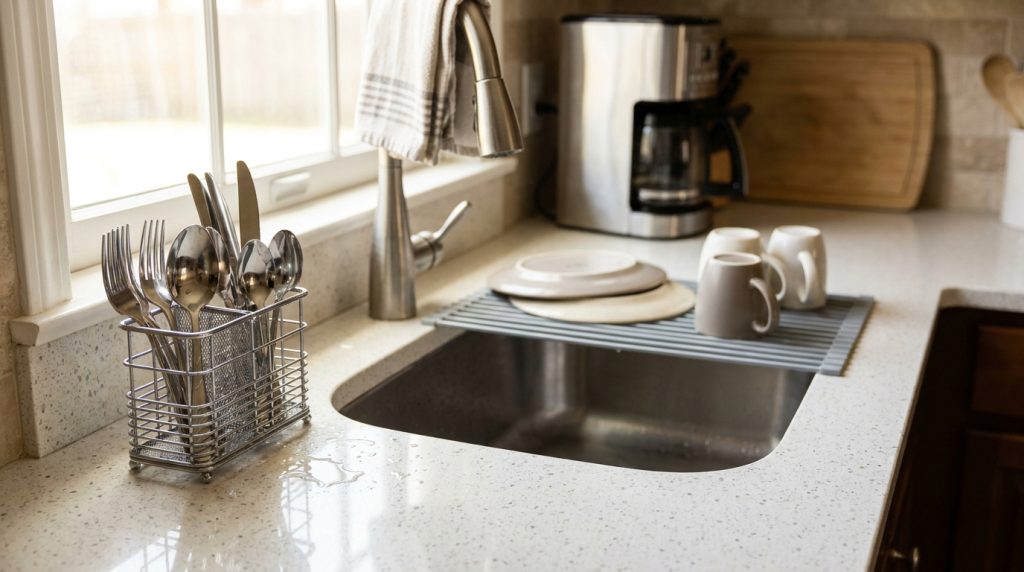
The smallest dishes can make the messiest looking drying zone.
There is one reason a clean counter can still look out of sorts: loose utensils. Forks slide under plates, spoons hold water in the bowl and small pieces go farther than you think. A simple utensil cup, jar or removable caddy creates a vertical space for cutlery, while plates and cups dry elsewhere. This is especially handy after breakfast, school lunches, or a bit of dinner cleanup when nobody wants to pull out a full rack in most U.S. kitchens. The trick is to choose a holder that can drain and be rinsed, not a decorative cup that traps water. Drying the utensils in containers makes the entire setup feel more intentional.
How to Stop the Drying Area From Becoming Permanent Storage
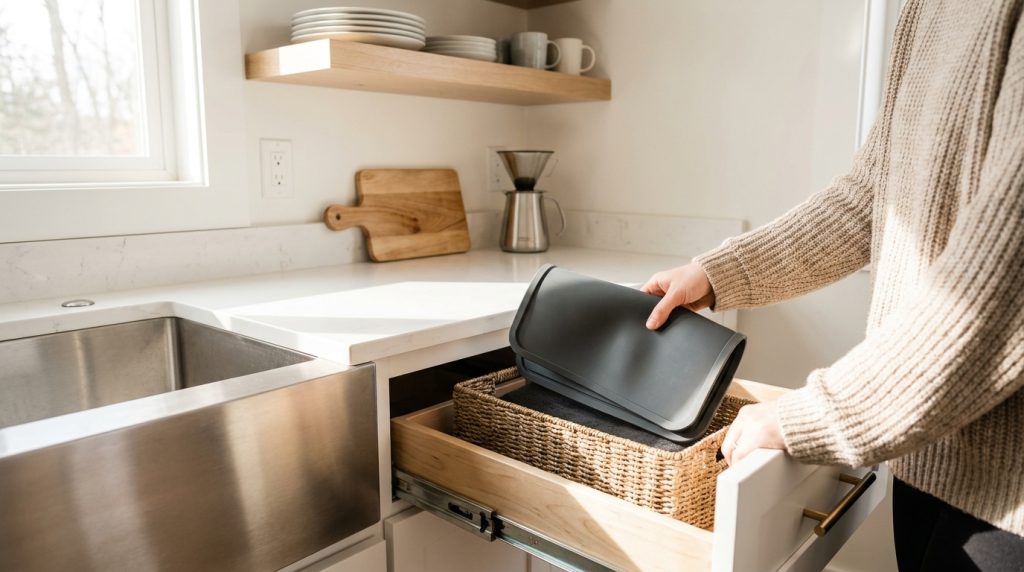
The rack is not a problem if it quietly becomes a shelf.
Drying rack, mat or roll-up rack should be transient. But in many homes, clean dishes sit long enough that the drying area becomes part of the storage system. That’s when counters can start to feel messy, even if the kitchen is technically clean. One simple rule to reset: when the dishes are dry, the drying tool is too. For busy parents or renters, this could happen in the morning coffee routine or just before starting dinner. The payoff is as visual as it is practical. A clean washbasin area makes the kitchen feel ready for cooking, unpacking the groceries, packing school lunches or the next load of dishes.
The One-Stack Rule That Keeps Plates From Taking Over
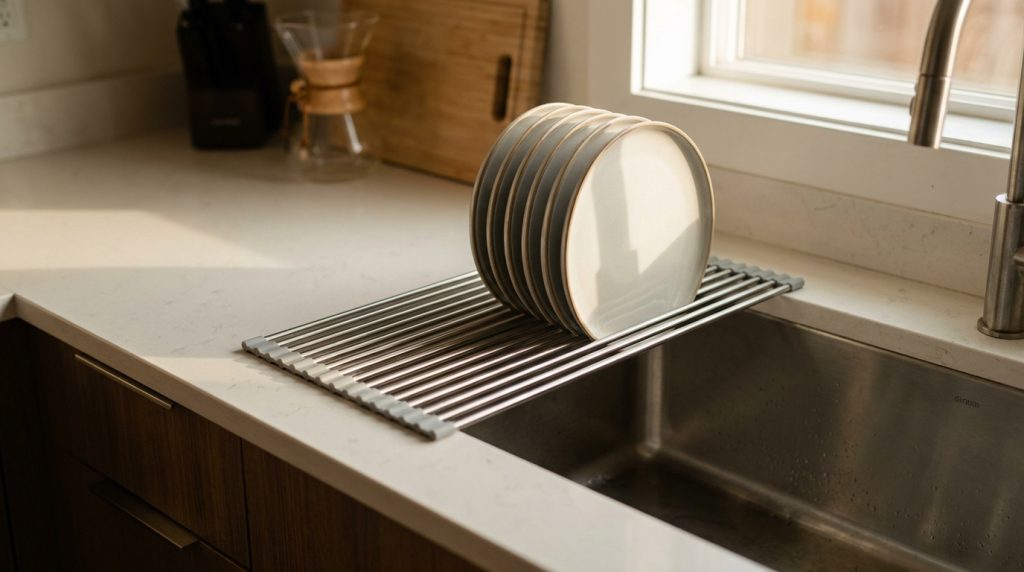
Plates don’t need the whole counter when you have 1 lane.”
The one-stack rule: plates dry in one contained stack or row, not across every open inch next to the sink. Very handy in a typical American kitchen where dinner plates, kids plates and lunch containers can quickly fill up the counter. A tight rack with slots helps but even a mat can do the job if the stack stays small and stable. The rule also provides a natural stopping point. If the stack is full, it might be time to dry and put away a few things before washing more. That prevents a weeknight dish session from turning into a counter takeover and makes the kitchen easier to work in right after cleanup.
The Under-Sink Storage Spot for Foldable Drying Tools
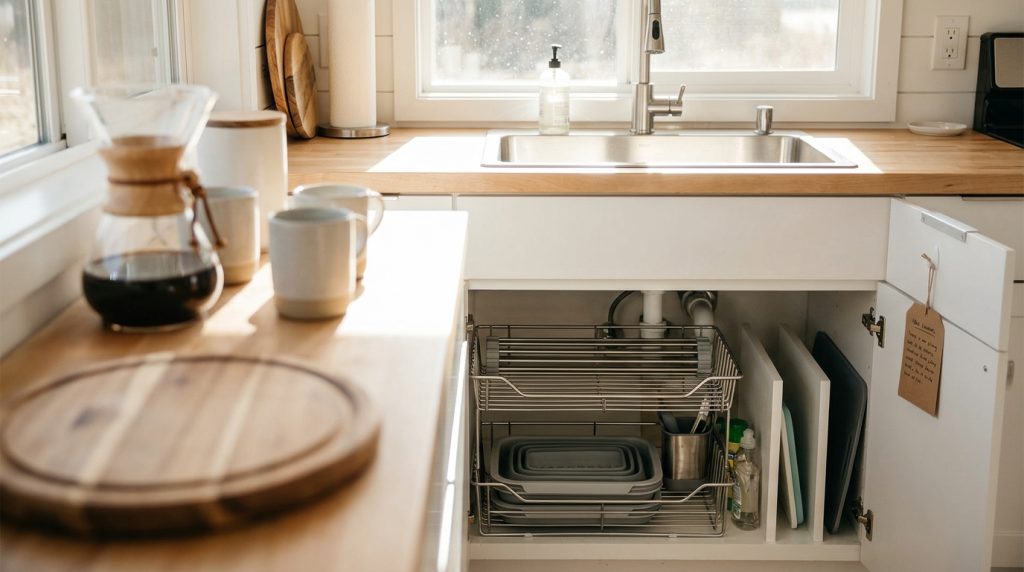
Only if it has a home does a foldable rack save space.
Foldable drying tools work best when you don’t have to leave them on the counter. Use it in an under-sink basket, narrow cabinet slot, pantry shelf or side-of-cabinet hook and the drying setup is something you can bring out only when you need it. In many U.S. homes, the error is buying a “space-saving” item and leaving it unfolded all week. If you are switching from a regular rack , first choose the storage spot . The right home should be easy to reach with wet hands at hand, but not so visible that it becomes another surface item. That little planning step is why the counter feels better after the dishes dry.
The After-Dinner Sink Reset That Makes Mornings Easier
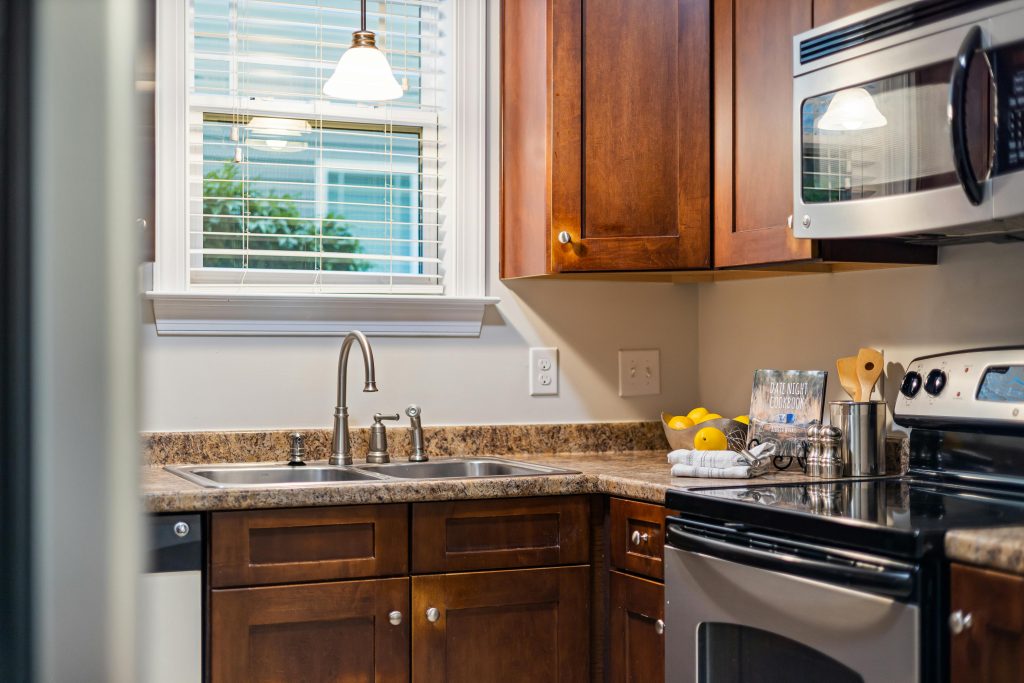
What happens after dinner may be the best dish-drying swap.
There is no need to reset a washbasin to have an immaculate kitchen after dinner. The useful version is smaller. Wash or load what you can, assign one drying zone for hand-washed stuff, clear the counter and fold or move the drying tool once stuff is dry. For busy U.S. households, that means morning coffee routines, packing lunches and preparing breakfast may feel less crowded. It also stops random lids, utensils and cups from collecting in the drying area overnight. The habit works by giving dish drying a finish line. A five-minute reset can even make a small kitchen feel more ready for the next day.
When a Real Dish Rack Still Makes Sense
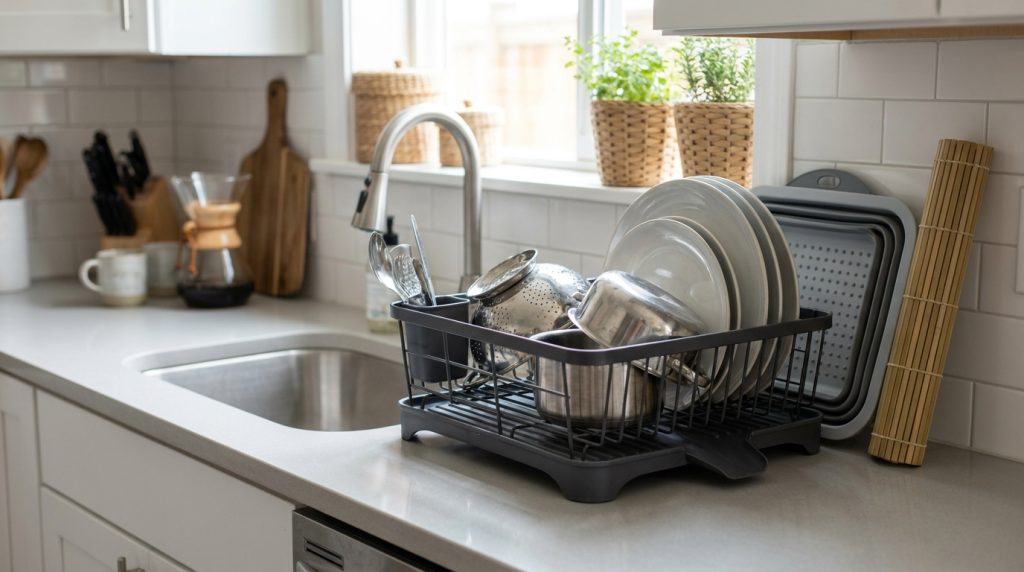
The smartest swap isn’t always ditching the rack.
A real dish rack still makes sense for families, homes without dishwashers, people who cook often or anyone washing pots and pans every night. The better question is if the rack fits the actual dish load and counter space of the kitchen. A smaller rack with a drainboard, a collapsable rack, or an over-sink model can be more useful than a large rack that sits half-full all day. In many American homes, the ideal setup is flexible: a rack for heavy days, a mat for fast loads, and a storage space for anything that folds. The point isn’t to eliminate dish racks, it’s to end the drying zone’s ownership of the counter.