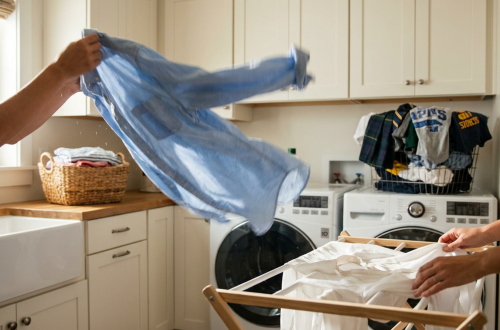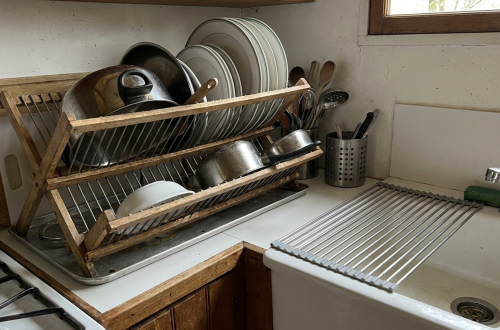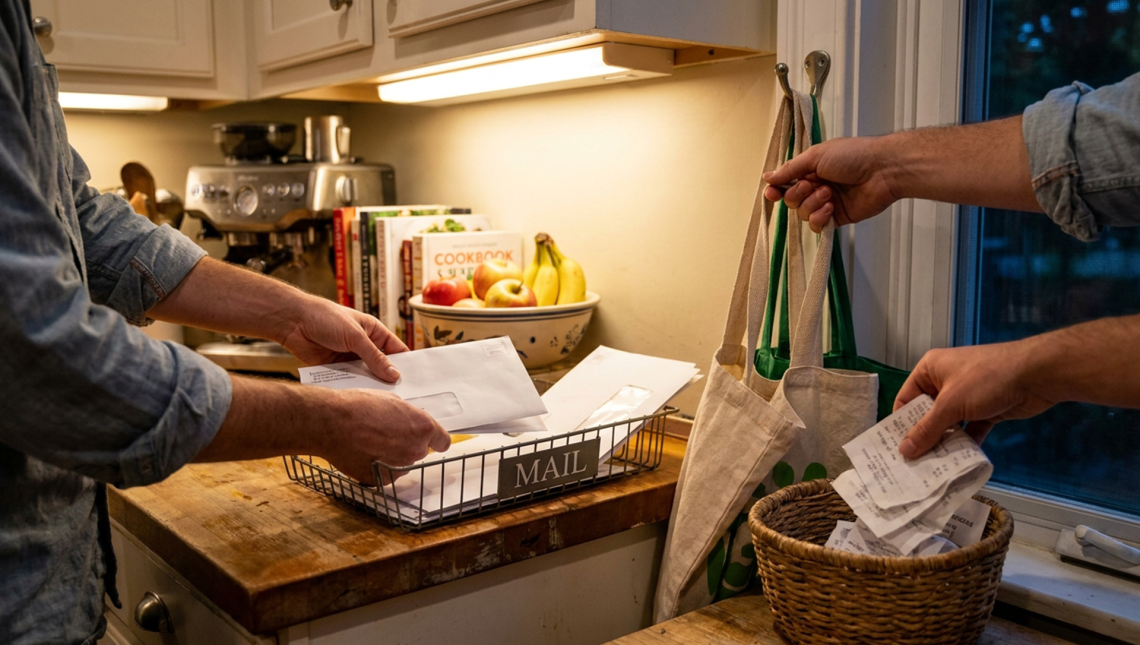
Clutter doesn’t usually come all at once. In many U.S. homes, it accumulates one small decision at a time — unopened mail next to the coffee maker, grocery receipts next to the fruit bowl, reusable bags left on the counter after a busy afternoon. Usually it isn’t the amount of stuff that makes the mess feel exhausting. It’s the amount of tiny decisions sitting out in plain sight. And that’s where the 5-minute decision reset comes in. This fast routine eliminates friction in the places we use every day instead of deep cleaning the whole kitchen. The result can make counters feel calmer, easier to wipe down and less crowded without turning the night into another full chore session.What’s surprising is how much clutter it takes to make a kitchen feel mentally crowded. In many American homes, counters are the holding zone for tiny unfinished decisions: receipts that still need checking, water bottles that need to be washed, grocery bags that never made it back to the car, and random objects that landed there “for now.”The helpful shift is realising that the mess isn’t often the problem. It’s the number of small decisions that sit in view all day long.That’s why the five-minute decision reset can be so powerful. Rather than scrubbing, organising cabinets or buying new storage containers, the routine aims to remove hesitation from the surfaces people see most. When the counter feels more usable, the entire kitchen can feel more serene without being perfectly staged.
Why the First Decision Usually Creates the Biggest Pile
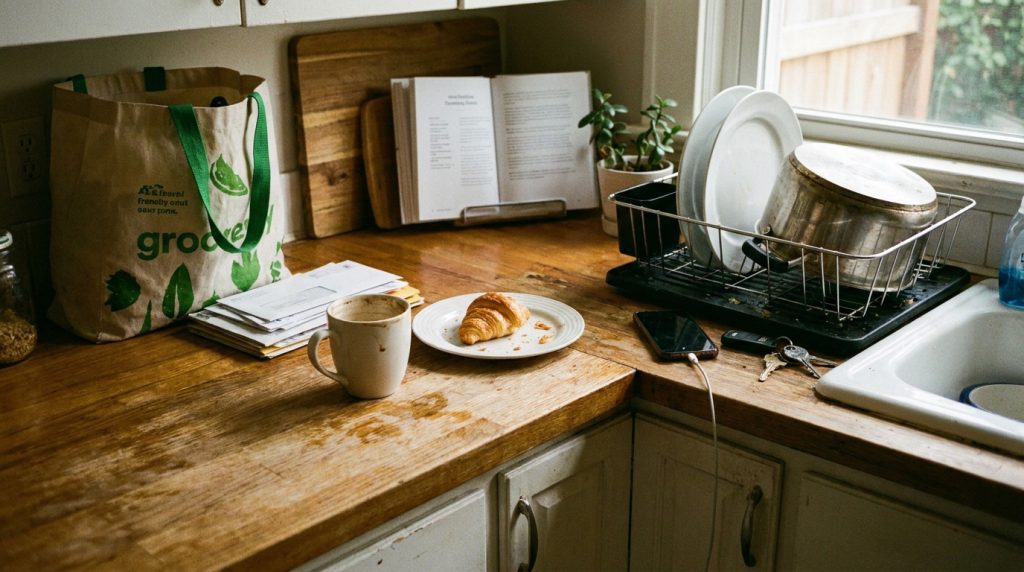
What is easy to overlook is that one delayed decision often brings five more. Next to the toaster, a receipt is laid down, then a grocery coupon dropped on top of it, then keys, charging cords and random packaging from the day.Counters fill so quickly because they are visible, flat and easy to reach. And they turn into temporary landing zones in many American kitchens long before anyone notices how crowded the surface feels.The helpful trick is making the first decision easier, instead of trying to organise the entire room. A small tray for mail, a basket for loose papers, or a hook near the garage door can shorten the pause that often becomes pileups.A useful payoff isn’t perfect. It is walking into the kitchen the next morning and seeing fewer choices left to finish on the counter.
The Small Reset That Makes Morning Kitchens Feel Easier
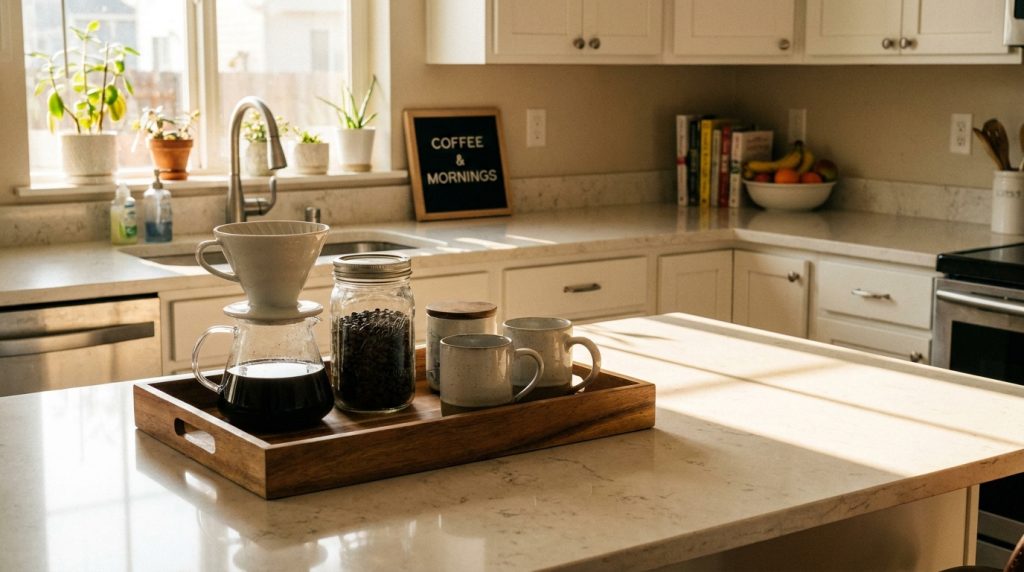
The useful part is that you don’t spend an hour cleaning up after dinner. “It’s a kitchen that’s easier to start over in the morning.”Most people see the difference on busy weekday mornings. Indeed, when the counters are crowded, even the simplest tasks like packing lunches or pouring coffee take longer due to the lack of space to work.That’s why frequent resets are more effective than occasional deep-clean sessions. A five-minute sweep at night eliminates the visual friction before it can build into a bigger project.The helpful detail is to keep only the things people actually use every day at their fingertips. Natural items like coffee pods, cooking oils, or a fruit bowl could be left out, but random paperwork, shipping envelopes, or unused gadgets can subtly make the room feel busier than it needs to be.This is not a kitchen from a showroom. It’s a counter that feels lighter and easier to use right off the bat.
What Usually Gets Left Behind After Grocery Runs
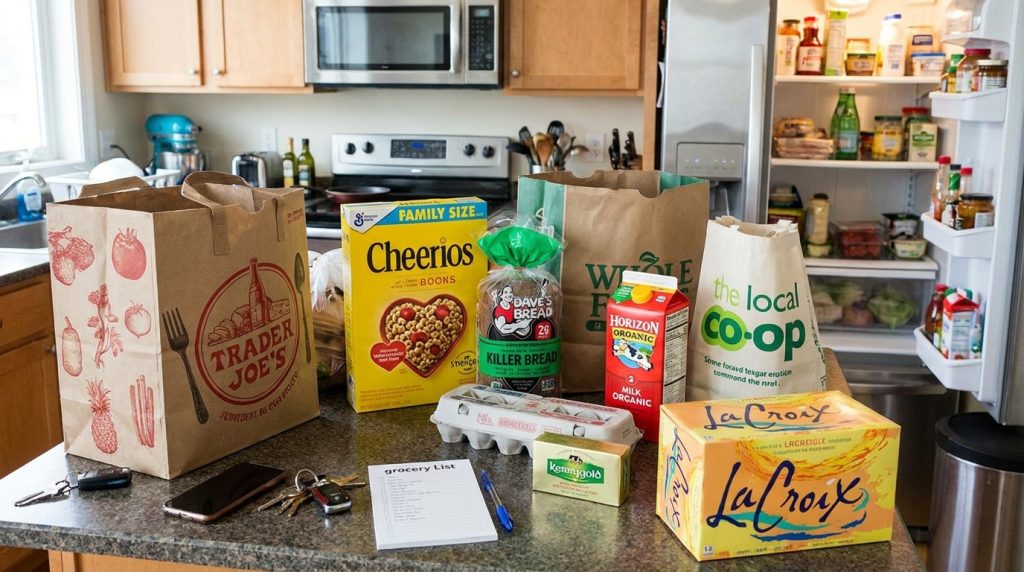
The missed moment often occurs immediately after groceries are brought in. Bags are dropped near the counter ‘temporarily’, receipts are left unfolded by the sink and pantry items are left out to be put away later in the evening.The thing that makes this stage tricky is that the clutter appears productive at first. The groceries are technically processed, but the unfinished pieces are visible for hours or days.The easy reset is to set quick exit points before unpacking. A hook for reusable bags by the garage, a small envelope for receipts or a pantry basket for extra snacks can cut down on what’s left out in plain sight.It’s a small change that changes the “feel” of the kitchen faster than buying more storage containers in many U.S. homes. It makes the space look calmer because the visual decisions are made faster.Adding more organising systems is not the useful part. It is reducing the duration objects stay in the “temporary” phase.
Why Flat Surfaces Quietly Collect More Than Expected
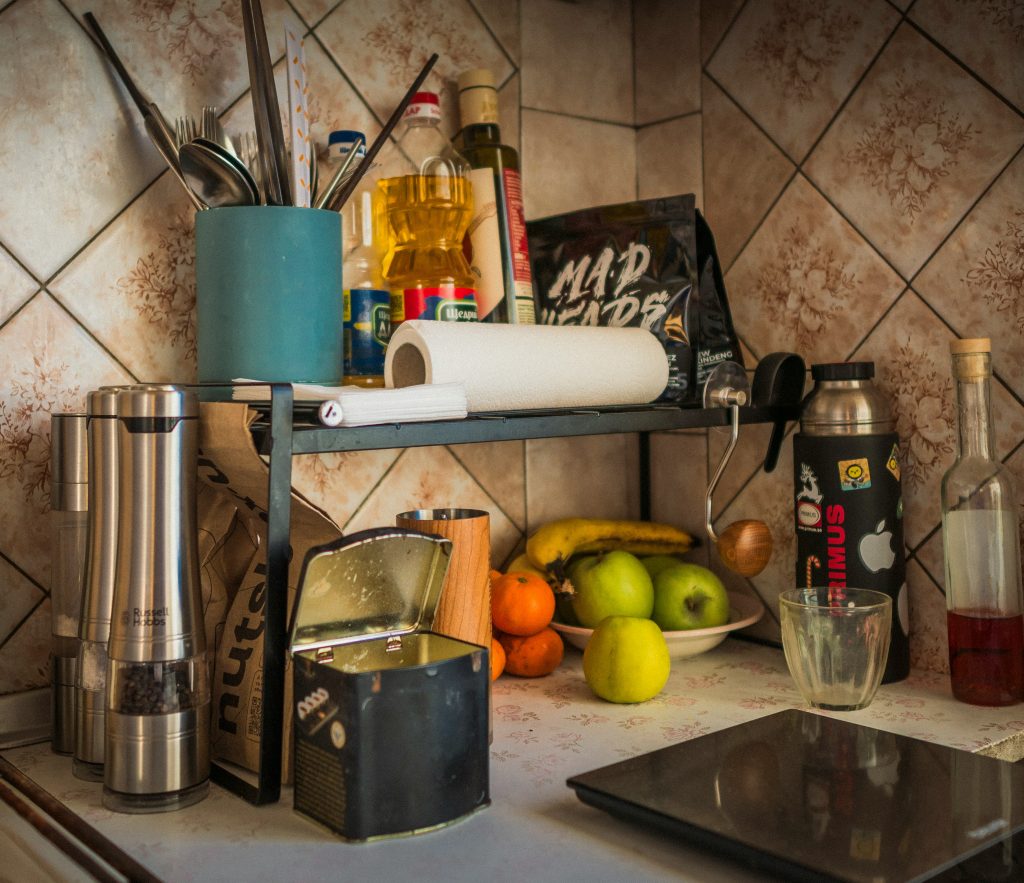
The interesting thing is how fast random open surfaces objects are. You can easily turn a clear counter into a holding area just because it’s convenient at the time.In busy homes, kitchen islands are a central, visible space where school papers and unopened packages tend to end up.The five-minute reset works best at the category level, not at the object level. People can sort quickly into simple groups: trash, belongs elsewhere, daily-use items, and “decide later” instead of asking where every item belongs.The last one’s more important than people think. A small basket for delayed decisions will prevent the whole counter from being the delay zone.The visual difference can be oddly calming, because the eye picks up on open counter space faster than details of perfect organization.
The Evening Habit That Can Make the Whole Kitchen Feel Calmer
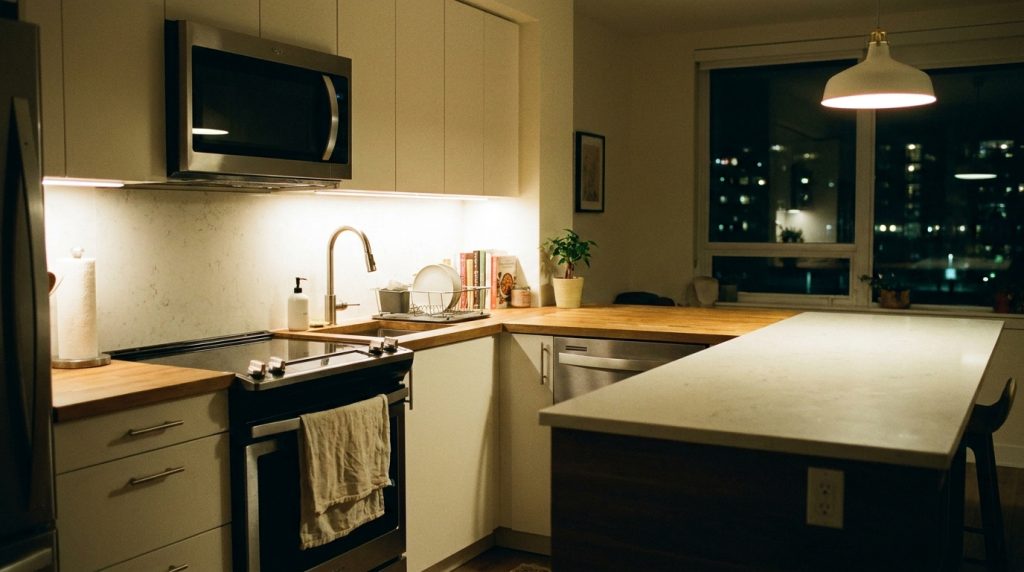
It’s not the cleaning itself that the small detail people often notice first. It’s how much more user-friendly the kitchen feels the following morning.Counters are almost always in view so they tend to set the overall mood of a room. If they feel crowded, the kitchen can feel unfinished when the dishes are done and the appliances are off.That’s why it’s best to keep the reset short. When the process feels like a big chore, people are less likely to do it regularly.Usually a simple routine of throwing away trash or moving obvious things, sweeping away crumbs, resetting one small zone is enough to bring back the lighter feeling people want from the room.The good thing is the routine gets easier as time goes on as there are fewer decisions left hanging overnight.The real reward is not having a picture perfect kitchen every night. It is noticing how much more calm a room can feel when the busiest surfaces are no longer burdened with every little decision of the day. When the counter itself is friction free, the whole kitchen often feels like an easier place to reset, to clean, and to walk back into tomorrow morning.